
WOSPORTS Mini Trail Camera
4.2Editor score
Low power consumption design
4 AA battery operation
Compact lightweight body
This guide compares the top battery life trail camera models for October 2026, evaluating power efficiency, solar compatibility, and runtime performance for
Selecting a trail camera with exceptional battery life is crucial for remote wildlife monitoring and security. Long-lasting power ensures your device captures critical moments without frequent maintenance trips.
We evaluated ten leading models based on power efficiency, solar compatibility, and real-world runtime data. Our analysis focuses on how each unit manages energy consumption during active and standby modes.
Each recommendation highlights specific strengths for different use cases. Please note that prices and availability change frequently, so verify current details before making your final purchase decision.
4.2Editor score

4.2Editor score

4.4Editor score
The following table provides a side-by-side comparison of the ten top-rated trail cameras evaluated for this guide. Each entry highlights key specifications related to power management and operational capabilities.




The WOSPORTS Trail Camera stands out for its flexible power design, supporting standard AA batteries, rechargeable lithium packs, or solar panels. This versatility ensures extended field runtime regardless of your preferred power source strategy.
We may earn a commission when you buy through this link, at no additional cost to you.
Its efficient circuitry minimizes drain during standby, allowing users to monitor properties for weeks without intervention. The solar compatibility option is particularly valuable for remote installations where battery replacement is difficult.
While the battery flexibility is excellent, users must purchase accessories separately. This increases initial setup costs but provides long-term savings through reduced battery waste and maintenance visits.
Buyers prioritizing power autonomy will find this model ideal. It balances high-resolution capture with energy conservation, making it a top choice for serious wildlife monitoring and security applications.
Supporting multiple power inputs allows users to switch between disposable batteries for short trips or solar setups for permanent monitoring without replacing the camera itself.
The internal power circuitry is optimized to consume minimal energy when no motion is detected, significantly extending the interval between required battery changes.
We may earn a commission when you buy through this link, at no additional cost to you.
The Moultrie Edge 3 Cellular is designed for connectivity and sustained power. It supports rechargeable lithium battery packs and solar panels, which are essential for maintaining cellular transmission over long periods.
We may earn a commission when you buy through this link, at no additional cost to you.
Its power management system balances image quality with data transmission needs. This ensures that photos and videos reach your device without draining the battery too quickly, even with frequent updates.
The main trade-off is the ongoing data plan cost and reliance on proprietary battery packs. However, for remote properties where battery swaps are impractical, this investment pays off in consistent monitoring.
This camera is best for users needing real-time data. Its power architecture supports continuous connectivity, making it a premium choice for managing large hunting grounds or security zones.
The camera works seamlessly with Moultrie's ecosystem of rechargeable packs and solar panels, reducing the need for disposable batteries during the hunting season.
Network data is compressed efficiently to lower power draw, ensuring that sending images does not significantly shorten the battery life compared to standard non-cellular units.
We may earn a commission when you buy through this link, at no additional cost to you.
The MAXDONE Solar Trail Camera offers an all-in-one solution with a built-in solar panel and a 6000mAh rechargeable battery. This design aims to provide uninterrupted power for year-round monitoring.
We may earn a commission when you buy through this link, at no additional cost to you.
The combination of high-efficiency solar charging and a large internal battery allows for extended use without swapping disposable batteries. It is ideal for locations with reliable sunlight exposure.
Users should note that the camera requires direct sunlight for optimal charging. Additionally, if the internal battery degrades over time, replacement may be more involved than standard AA setups.
For those wanting a maintenance-free experience, this model is a strong contender. Its solar integration minimizes ongoing costs and ensures the camera remains active during critical periods.
The integrated panel charges the internal battery during the day, maintaining a reserve that supports operation through nights and cloudy periods.
By relying on solar energy, users significantly reduce waste from disposable batteries, making this an environmentally friendly option for outdoor monitoring.
We may earn a commission when you buy through this link, at no additional cost to you.
The Meidase P70 is designed with solar readiness in mind, allowing users to pair it with a compatible panel for eco-friendly operation. It also retains the option for standard AA battery backup.
We may earn a commission when you buy through this link, at no additional cost to you.
This dual approach gives flexibility. You can run it on batteries for short term use or add a solar panel for long term monitoring without worrying about battery depletion.
The trade-off is that the solar panel is not included, adding to the initial cost. However, this modular design allows you to upgrade power options based on your specific site requirements.
It is a great choice for hunters who want high quality images and flexible power. The non-cellular design keeps battery drain low, extending runtime significantly compared to connected models.
The unit supports external solar panels, giving you the freedom to choose your power strategy without committing to a proprietary system.
Without cellular transmission, the camera consumes less power, allowing standard batteries to last longer when solar is not an option.
We may earn a commission when you buy through this link, at no additional cost to you.
The WOSPORTS Mini Trail Camera is designed for efficiency. Its compact body uses fewer batteries than larger models, resulting in lower overall power consumption and extended standby time.
We may earn a commission when you buy through this link, at no additional cost to you.
It relies on just 4 AA batteries, making it lightweight and easy to carry. This is perfect for users who need to deploy multiple units across a large area.
The trade-off is limited image resolution compared to larger units. However, for basic monitoring and scouting, it provides sufficient clarity without draining resources quickly.
This model is ideal for budget-conscious buyers. It balances affordability with practical power management, ensuring you get reliable performance without frequent maintenance.
Using only four batteries reduces weight and bulk, while the low-power circuitry ensures each battery lasts longer than in standard cameras.
The reduced cost of entry makes it easy to buy multiple units, spreading your budget across several locations for better coverage.
We may earn a commission when you buy through this link, at no additional cost to you.
The GardePro E5S is built for durability and power longevity. It supports standard AA batteries and solar panels, providing reliable performance even in harsh outdoor conditions.
We may earn a commission when you buy through this link, at no additional cost to you.
Its power consumption is low due to non-cellular operation. This allows the batteries to last longer between changes, making it suitable for remote trails where access is limited.
The unit is rugged but heavier than some mini models. This weight ensures it stays secure but may make installation slightly more labor-intensive compared to lighter options.
Buyers seeking reliability will appreciate this model. It balances high resolution with efficient power management, ensuring consistent results over long periods.
The camera is engineered to handle extreme weather without power failure, keeping your monitoring active during storms or temperature swings.
Without data transmission, the battery drain is minimized, extending runtime significantly compared to cellular units with similar hardware.
We may earn a commission when you buy through this link, at no additional cost to you.
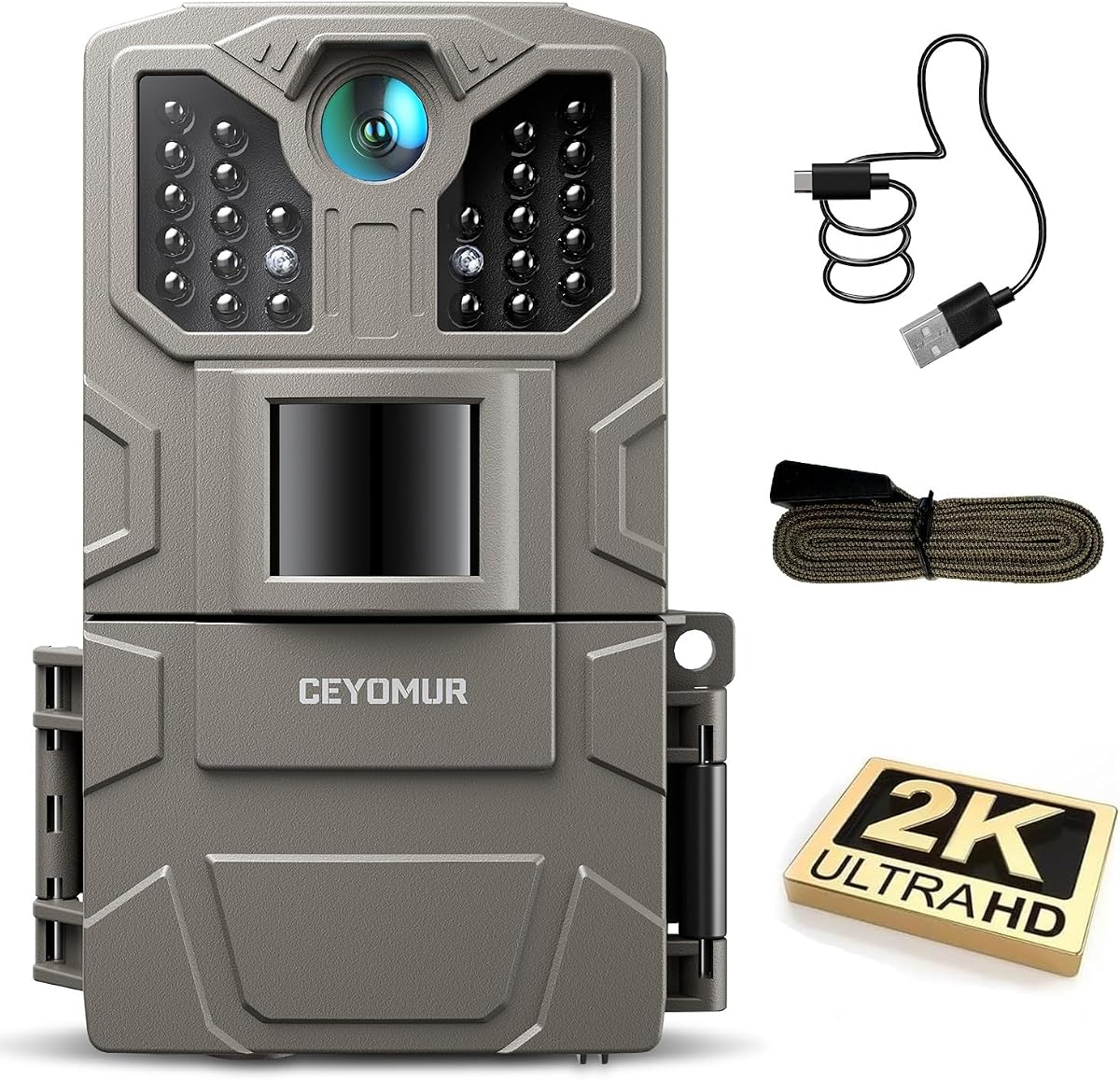
The CEYOMUR Trail Camera is an entry-level option that focuses on simplicity and battery life. It uses standard AA batteries and is designed for long standby periods.
We may earn a commission when you buy through this link, at no additional cost to you.
Its power management is straightforward, allowing it to run for weeks without heavy use. This makes it a good choice for beginners who want reliable monitoring.
The main drawback is the lower rating and basic sensor. However, for casual use where high resolution is not critical, it provides acceptable performance at a low cost.
This camera is best for those on a tight budget. It offers basic functionality without unnecessary features that drain power, ensuring long-term operation.
The simple design lacks power-hungry features, which helps extend battery life even with standard AA cells.
The low price point allows you to test trail cameras without investing in expensive models, making it a safe first step.
We may earn a commission when you buy through this link, at no additional cost to you.
The WOSPORTS 2 Pack Kit offers two compact cameras, allowing for wider coverage. Each unit runs on 4 AA batteries and is designed for low power consumption.
We may earn a commission when you buy through this link, at no additional cost to you.
This bundle is cost-effective for users needing to monitor multiple areas. The low power design ensures both cameras can run for long periods without frequent changes.
You must supply separate batteries for each unit, which adds to the initial cost. However, the savings compared to buying high-end units are significant.
This kit is ideal for small farms or properties. It provides reliable monitoring without the complexity of cellular features, making it a practical choice.
Getting two cameras in one package reduces packaging waste and cost, making it easier to deploy a network quickly.
With two cameras running on low power, total battery usage remains manageable, allowing extended monitoring across two sites.
We may earn a commission when you buy through this link, at no additional cost to you.
The WOSODA 4 Pack Kit provides a complete system for extensive monitoring. It includes four cameras, SD cards, and batteries, ensuring you can start immediately.
We may earn a commission when you buy through this link, at no additional cost to you.
Each camera uses 4 AA batteries, which is efficient for a bundle of this size. The low power consumption helps manage the total power load across all units.
The downside is needing 16 batteries upfront. However, since they are included, this simplifies setup and avoids immediate additional purchases.
This is a great choice for large properties needing many cameras. It offers a complete solution with minimal extra effort for power setup.
The inclusion of batteries and SD cards ensures you have everything needed for operation, streamlining the initial deployment process.
Despite the number of units, the low power design ensures each battery lasts a reasonable time, making the system viable for long-term use.
We may earn a commission when you buy through this link, at no additional cost to you.
The GardePro E5S 2 Pack offers two high-resolution cameras in one bundle. It is designed for users who want quality imaging with reliable power options.
We may earn a commission when you buy through this link, at no additional cost to you.
Each unit supports solar panels and AA batteries, allowing flexible deployment. The non-cellular design ensures lower power consumption, extending the runtime significantly.
The main challenge is the upfront cost and the need to purchase batteries separately. However, for serious hunters, the image quality and power flexibility are worth the investment.
This set is best for extensive property monitoring. It combines high resolution with durable power options, providing a professional-grade solution.
Getting two high-performance cameras together reduces per-unit costs and ensures consistent quality across all monitored areas.
The robust power support allows for permanent setups with solar panels, ensuring continuous monitoring without manual intervention.
We may earn a commission when you buy through this link, at no additional cost to you.
Selecting the right trail camera requires understanding power needs. This guide covers key factors to consider for maximizing battery life and monitoring duration.
Modern trail cameras offer various power inputs including disposable AA batteries, rechargeable lithium packs, and solar panels. Disposable batteries are easy to replace but add long-term costs. Rechargeable packs are convenient but require charging cycles. Solar panels provide the longest runtime by harnessing sunlight.
Choose a power source that fits your site. Use disposables for short trips and solar for permanent setups to minimize maintenance.
Alkaline AA batteries are standard and widely available, but they may lose efficiency in cold temperatures. Lithium AA batteries perform better in cold and last longer, though they cost more. Rechargeable options vary by capacity and voltage.
For cold climates, lithium AA batteries are recommended for consistent performance. For long-term setups, rechargeable or solar is better.
Solar compatibility is crucial for remote sites where battery changes are difficult. Some cameras have built-in panels, while others support external ones. Built-in panels are easier to install but may charge slowly in shaded areas.
Check if the camera supports external solar panels if you need flexible placement. Ensure the panel matches the voltage requirements of the unit.
The frequency of motion triggers impacts battery life significantly. A camera that records every movement will drain faster than one with interval recording. Faster trigger speeds may consume more power during active capture.
Adjust trigger settings based on your needs. Lower the sensitivity in low-traffic areas to save power without losing critical data.
Higher resolution images and video consume more power during processing and storage. Cameras recording 4K video will drain batteries faster than those shooting standard HD or lower resolutions. Balance quality with power needs.
Select the lowest resolution that meets your tracking requirements to extend battery life. Avoid unnecessary 4K recording if standard HD is sufficient.
Cellular cameras transmit data over networks, which drains batteries much faster than non-cellular models. Non-cellular cameras only store data locally, saving significant power. Cellular models require frequent battery swaps or strong solar support.
Opt for non-cellular units if you can retrieve SD cards manually. Only choose cellular if remote access is essential.
Standby mode is the state when the camera is not actively capturing. Efficient cameras draw almost no power in standby, preserving energy for actual use. Look for models with low standby current specifications.
Prioritize cameras known for low standby drain. This ensures that even with few triggers, the battery lasts for months rather than days.
Batteries lose efficiency in extreme cold or heat. Cameras rated for wide temperature ranges will manage power better in harsh environments. Some models have internal heating that consumes extra power.
Choose units rated for your local climate. Avoid features like heating if your area does not require it to save power.
Install fresh batteries or fully charged packs before deployment. Ensure all contacts are clean to avoid power loss. If using solar, position the panel facing south in the northern hemisphere for maximum exposure.
Set the trigger sensitivity appropriately. High sensitivity can cause false triggers from leaves or bugs, draining the battery unnecessarily. Test the camera in the field to ensure it activates only when needed.
Check the battery level regularly. Many modern cameras display power status on an LCD screen. For solar setups, verify that the panel is clean and free of snow or debris to maintain charging efficiency.
Battery life depends on usage. A typical unit with AA batteries can last from 1 to 6 months depending on trigger frequency. Solar models can last indefinitely if positioned in direct sunlight daily.
Rechargeable batteries reduce long-term waste and cost. They are better for frequent users. However, standard AA lithium batteries offer better cold weather performance and no charging hassle.
Yes, but efficiency drops due to lower sunlight and snow cover. Clean the panel regularly. Use a larger panel to compensate for reduced solar intensity during shorter winter days.
Yes, if it has sufficient power. Use solar support or lithium batteries for winter. Ensure the unit is waterproof and rated for extreme temperatures to survive the season.
Yes, cellular transmission uses significant power compared to local storage. This drastically reduces battery life. Use cellular only when remote access is necessary.
Use lithium batteries, reduce video recording, lower resolution, and adjust motion sensitivity. Avoid placing the camera where it captures constant background movement like swaying trees.
Lithium AA batteries are best for cold weather because they maintain voltage in freezing temperatures. Alkaline batteries may fail quickly in sub-zero conditions.
They consume very little power in standby mode. Modern units are designed to sleep deeply until motion is detected. This allows months of standby without active triggers.
The top picks for battery life include the MAXDONE Solar for integrated charging and the Moultrie Edge 3 for cellular efficiency. For budget needs, the WOSPORTS Mini offers excellent value.
Prioritize power compatibility with your site. If you can access sunlight, go for solar. If you can manage monthly swaps, standard lithium AA batteries are reliable.
Remember that prices fluctuate often. Check current listings before buying to ensure you get the best deal on the right power configuration for your needs.