
Behringer Super-X Pro Cx3400 High-Precision Stereo Crossover
3.9Editor score
24 dB octave filters
Individual limiter per output
Switchable subsonic filter
Discover the top audiophile active crossover options for precise sound shaping. This guide compares ten expert models for home and professional audio setups.
Finding the right crossover is crucial for any serious audiophile seeking to optimize speaker performance. Active crossovers split audio signals into distinct frequency bands before amplification, ensuring each driver receives only the frequencies it can handle. This precision reduces distortion and improves clarity across the entire sound spectrum.
We evaluated ten top models based on build quality, signal processing capabilities, and user feedback. Our comparison focuses on features like adjustable crossover points, phase control, and output flexibility. Whether you need studio-grade accuracy or robust professional durability, this list covers the essential options available today.
Each pick highlights specific strengths tailored to different listening environments and system requirements. From budget-friendly units to high-end analog processors, you will find a suitable match for your setup. Remember that availability and pricing fluctuate, so verify current details before purchasing your ideal component.
3.9Editor score

5.0Editor score

4.5Editor score
The following table provides a side-by-side comparison of all ten active crossover models reviewed in this guide. Examine key specifications and features to determine which unit aligns best with your specific audio system requirements and budget constraints.





The Marchand XM66 stands out as a premier choice for audiophiles demanding pure analog sound quality. With a perfect rating, this crossover offers a transparent signal path free from digital conversion artifacts. Its 2-way design ensures precise separation between woofers and tweeters for accurate imaging.
We may earn a commission when you buy through this link, at no additional cost to you.
Key strengths include its digital display that allows for exact frequency setting visualization without guesswork. The 24dB/octave crossover filters provide steep rolloffs to protect drivers and minimize interference. Additionally, its custom manufacturing in the USA ensures high build quality and attention to detail.
Trade-offs involve its limited 2-way configuration which might not suit complex multi-way systems. The price is also higher compared to mass-produced options. However, for critical listening setups prioritizing signal purity, these limitations are easily acceptable compromises.
This unit is ideal for home theater enthusiasts or musicians seeking high-fidelity sound reproduction. If you value analog integrity and precision control, the Marchand XM66 is a top recommendation. Verify availability as lead times may vary for custom builds.
The fully analog signal chain maintains the original waveform integrity ensuring no digital latency or quantization noise affects your music.
The integrated digital display shows your exact crossover point allowing for repeatable adjustments across different listening sessions easily.
We may earn a commission when you buy through this link, at no additional cost to you.
This professional crossover offers exceptional flexibility for both live sound and installed audio applications. It supports selectable 2/3-way stereo and 4-way mono modes to adapt to various speaker configurations. The 4.3 rating reflects solid reliability for demanding environments.
We may earn a commission when you buy through this link, at no additional cost to you.
Its independent output gain and phase invert controls allow precise tuning to fix polarity issues or room acoustics. Balanced XLR inputs and outputs ensure noise-free signal transfer over long cable runs. The rugged chassis handles touring stresses without compromising performance.
Potential drawbacks include limited high-resolution display options and standard voltage requirements. These are minor compared to the robust feature set provided. For mobile DJs or installers needing versatile routing, this model delivers excellent value.
Buy this if you manage multiple sound setups requiring quick mode switching. The combination of balanced connectivity and individual band controls makes it a versatile tool. Check local power standards before installation to ensure compatibility.
Switch between stereo for PA mains and mono for dedicated subs with ease to match your venue or setup needs perfectly.
Balanced XLR connections reject electromagnetic interference keeping your audio clean even in electrically noisy live environments.
We may earn a commission when you buy through this link, at no additional cost to you.
Designed for PA systems, this crossover splits audio signals to optimize amplifier power and reduce distortion. The 4.4 rating highlights its effectiveness in delivering clean sound. It manages low, mid, and high frequencies across stereo or mono configurations seamlessly.
We may earn a commission when you buy through this link, at no additional cost to you.
Key features include separate output gain controls and a 40Hz low-cut filter for subwoofer protection. XLR inputs ensure balanced signal paths vital for professional installations. The LED matrix clearly shows active modes aiding quick setup verification.
Trade-offs involve the lack of remote phase control and fixed voltage input. While manageable, these add minor setup complexity. However, the overall control and reliability make it a strong choice for DJs and installers.
Choose this for indoor or outdoor venues requiring reliable signal routing. Its straightforward design simplifies operation for non-technical users. Ensure you have access to appropriate power sources during setup.
Balanced XLR inputs and outputs provide excellent noise rejection essential for clean audio over long cable distances.
The 40Hz low-cut switch removes infrasonic frequencies protecting your subwoofers from unnecessary stress and distortion.
We may earn a commission when you buy through this link, at no additional cost to you.
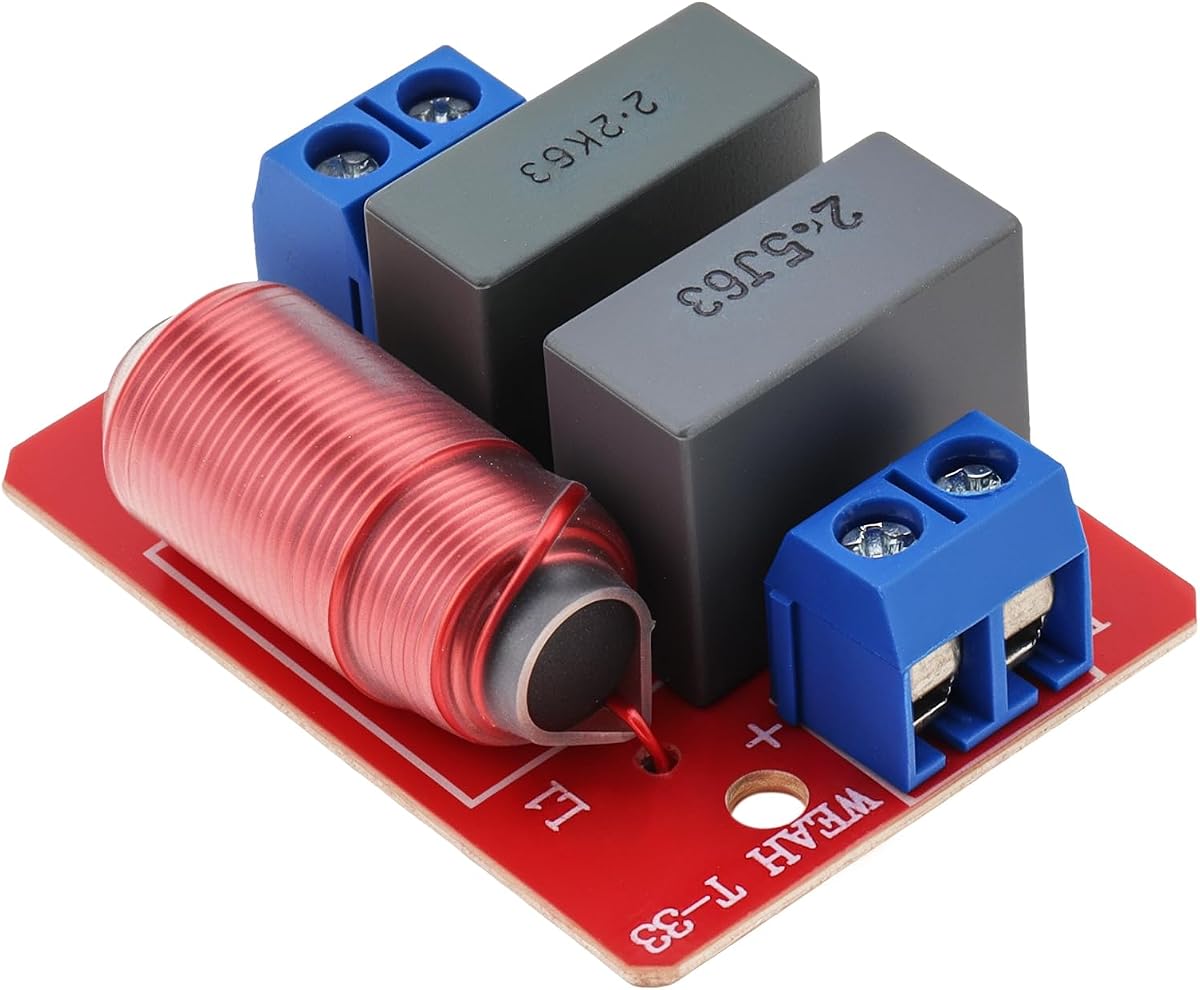
This passive crossover focuses on isolating pure treble frequencies for tweeters in car or home systems. A perfect 5.0 rating indicates exceptional performance for its price point. It handles 80W RMS ensuring durability even at higher volumes.
We may earn a commission when you buy through this link, at no additional cost to you.
Built with 2.2µF and 2.5µF premium capacitors for smooth high-frequency roll-off. Heavy-duty inductors minimize signal loss while flame retardant PCBs ensure safety. Pre-wired leads simplify integration into existing speaker setups without extra tools.
Limitations include single-band operation and potential soldering requirements for some terminals. These constraints suit specific high-frequency needs rather than full-system control. However, the sound quality improvement is significant for listeners seeking clarity.
Ideal for upgrading existing systems where tweeters need precise high-frequency separation. It allows full amp power to reach relevant frequencies reducing distortion. Verify impedance matches before installation to avoid damage.
By blocking mid and low frequencies this unit ensures tweeters reproduce vocals and instruments with exceptional detail.
Screw type connectors and high purity copper leads allow for effortless installation without complex soldering work.
We may earn a commission when you buy through this link, at no additional cost to you.
Engineered for vehicles, this processor optimizes sound by tuning subwoofer and front amplifier levels effectively. The 4.2 rating suggests reliable performance for daily driving audio needs. It supports both 2-way and 3-way configurations for versatile setups.
We may earn a commission when you buy through this link, at no additional cost to you.
Features include a remote bass control for on-the-fly adjustments and phase shift switches to align subwoofers. Level adjust knobs allow precise matching between channels. Built-in crossovers simplify signal routing reducing cable clutter in tight spaces.
Trade-offs involve basic feature sets compared to full DSP units and limited adjustment granularity. However, for standard car audio systems, it offers necessary functionality without complexity. It remains a cost-effective solution for mobile audio enthusiasts.
This processor fits those upgrading factory systems with aftermarket subs. Verify voltage requirements match your vehicle electrical system for safe operation. Check current availability before purchasing as stock may vary.
Adjust subwoofer output directly from your dashboard allowing for dynamic control over bass levels while driving.
180-degree phase shifts help align subwoofer signals with front outputs improving bass integration and impact.
We may earn a commission when you buy through this link, at no additional cost to you.
This 6-way crossover delivers high-quality sound using advanced filtering to optimize every speaker channel. The 4.5 rating reflects its capability for delivering optimal audio experiences in complex car setups. Its separate inputs for front, rear, and subs allow customized routing.
We may earn a commission when you buy through this link, at no additional cost to you.
A multiplier switch enables continuous crossover frequency adjustment for precision tuning. Ground loop isolation prevents interference ensuring clean signal processing. Remote bass knobs provide convenient level control from the dashboard during use.
Installation requires custom mounting and detailed tuning expertise to maximize benefits. The compact size aids fitment but adds complexity. However, the sound quality gains justify these demands for serious enthusiasts.
Ideal for custom car audio installations needing granular frequency separation. Ensure you have the tools and knowledge for proper setup. Verify mounting dimensions fit your available space before purchase.
The multiplier switch allows continuous adjustment of crossover points giving you exact control over frequency separation.
Ground loop isolation circuits eliminate hum and noise ensuring superior sound quality even in electrically noisy vehicles.
We may earn a commission when you buy through this link, at no additional cost to you.
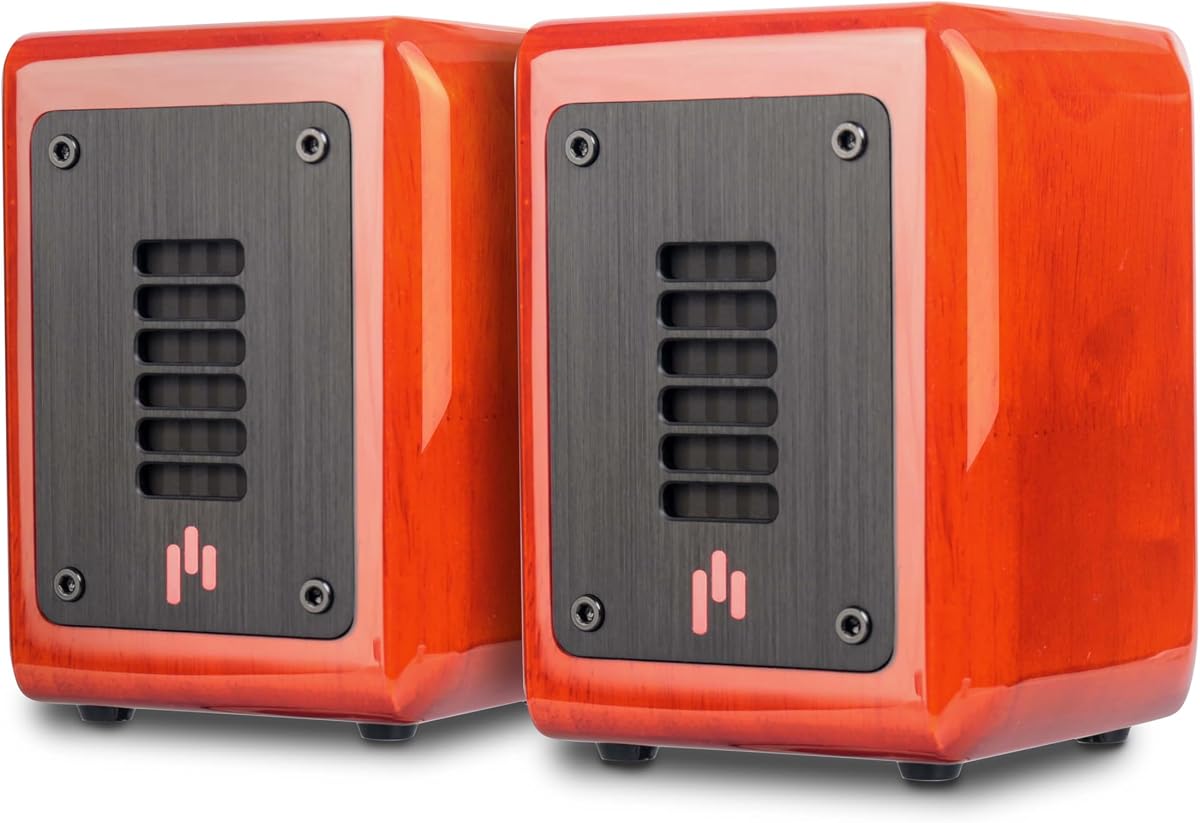
This super tweeter adds subtle high-frequency enhancement to existing home audio systems for added air and detail. With a 4.0 rating, it effectively extends frequency response up to 40kHz. It blends seamlessly with many speaker brands for a cohesive sound.
We may earn a commission when you buy through this link, at no additional cost to you.
Features include a high-pass filter with 5 preset crossover points simplifying setup. Planar magnetic technology handles highs delicately without harshness typical of horn tweeters. Designed to sit on existing speakers it requires minimal modification.
Trade-offs include limited volume output making it unsuitable as a standalone driver. It is a supplement rather than a primary component. Users must ensure speaker efficiency matches the 85 to 93 dB range for optimal results.
Choose this for critical listeners seeking ultimate clarity without replacing main speakers. Verify compatibility with your system efficiency to ensure safe operation. Read user reviews for specific brand pairing tips.
Extending response up to 40kHz this tweeter adds subtle air and detail that enriches the overall sound field.
Unlike horn tweeters it delicately handles high frequencies bringing a new dynamic without introducing harsh artifacts.
We may earn a commission when you buy through this link, at no additional cost to you.
This passive crossover handles high power levels for demanding home theater setups with dual high and low frequency design. Its 3.6 rating indicates mixed user experiences. The adjustable crossover points allow tuning at 2600Hz or 2650Hz for fine sound shaping.
We may earn a commission when you buy through this link, at no additional cost to you.
Built with oxygen-free copper inductors and specialty capacitors to optimize signal stability. Solderless terminals simplify installation reducing technical barriers. It supports 2~6 Ohm impedance ensuring compatibility with a wide range of speakers.
Limitations include passive design constraints where active units often offer better precision. Some users report quality inconsistency. However, the high power handling makes it suitable for robust systems where amplification is separated.
Ideal for dedicated listening rooms needing high power distribution. If you seek precise control, active alternatives may suit better. Verify terminal connections carefully during setup to ensure secure fitment.
Withstanding up to 400 watts this unit manages powerful home theater signals without compromising circuit stability.
Suitable for 2 to 6 Ohm speakers it integrates seamlessly with diverse audio equipment enhancing setup flexibility.
We may earn a commission when you buy through this link, at no additional cost to you.
A compact 4-way crossover designed for car audio systems with customizable adjustments and bass boost. The 4.5 rating suggests strong performance in mobile setups. It features separate channels for low and high frequencies allowing precise signal routing.
We may earn a commission when you buy through this link, at no additional cost to you.
Its lightweight build aids installation in confined spaces. The adjustable settings allow tailoring sound to specific vehicle acoustics. RCA channels ensure easy connection to standard head units. Overall it offers good value for car enthusiasts.
Trade-offs include lack of phase control and limited documentation for complex setups. These are manageable for standard audio needs. For those prioritizing size and customization within budget it remains a solid option.
Ideal for custom car installs requiring flexible routing. Check power requirements match your system voltage before installation. Consult forums for specific setup tips if needed.
Its small footprint allows easy placement in tight vehicle enclosures without compromising on performance or channels.
Adjustable settings let you fine-tune output levels and EQ to suit your listening preferences perfectly.
We may earn a commission when you buy through this link, at no additional cost to you.
This stereo crossover offers high-precision filtering with state-variable Linkwitz-Riley filters for accurate frequency separation. With a 3.9 rating, it serves as an entry-level option for those needing precise control. It supports 2-Way 3-Way and Mono 4-Way modes flexibly.
We may earn a commission when you buy through this link, at no additional cost to you.
Features include individual limiters per output to protect drivers and switchable equalization for constant directivity horns. Zero phase difference ensures flat summed amplitude response. Its affordable price point makes professional features accessible to more users.
Trade-offs include potential build quality variance reflected in the rating. Manual phase adjustments may require trial and error. However, for budget-conscious professionals needing flexibility, it delivers essential tools effectively.
Choose this for installed audio or small venues needing precise frequency management. Verify specific feature needs match your setup before purchase. Ensure proper ventilation for stable operation.
Zero phase difference and flat amplitude response ensure smooth transitions between frequency bands without audible dips.
Individual limiters on each output prevent clipping and distortion protecting your speakers from overload damage.
We may earn a commission when you buy through this link, at no additional cost to you.
Selecting the right active crossover involves evaluating signal processing capabilities, input/output options, and control features. Understanding these factors ensures compatibility with your amplifiers and speakers for optimal performance.
Filter slopes determine how sharply frequencies are attenuated beyond the cutoff point. Steeper slopes like 24dB/octave protect drivers better and reduce overlap compared to gentler options. Look for Linkwitz-Riley filters for phase coherence and flat summation in your listening environment.
Prioritize steeper slopes to ensure clean separation and protect expensive drivers from low-frequency damage.
Professional setups require balanced XLR inputs to reject noise over long cable runs. RCA is acceptable for shorter home runs but offers less interference protection. Ensure your crossover supports the impedance and voltage levels of your existing audio gear.
Choose balanced XLR connections for professional installations to maintain signal integrity and reduce hum.
Look for adjustable crossover points across a wide frequency range to accommodate various speaker drivers. Independent output gain controls allow precise level matching between bands. Phase invert switches help correct polarity issues that can cause bass cancellation.
Ensure you have enough knobs to fine-tune levels and crossover points for your specific speakers.
Active crossovers split signals before amplification requiring separate amps for each band. This allows precise control and reduces distortion. Passive units work after amplification but offer less flexibility. Decide based on your amp configuration and desired sound quality.
Active designs provide superior control and fidelity for audiophiles willing to use multiple amplifiers.
Built-in limiters protect drivers from clipping and overload during peak volumes. Switchable subsonic filters remove infrasonic frequencies that can waste power and damage woofers. These features are vital for long-term system reliability in live or loud environments.
Check for individual limiters per output to ensure each speaker band is adequately protected.
Rugged chassis and high-quality components ensure stable performance over time. Look for units designed for professional use if you move equipment often. Custom manufacturing often yields better attention to detail than mass-produced options.
Invest in durable units with quality components to avoid signal degradation and hardware failure later.
Active units require external power often at standard mains voltages. Ensure your venue or home can support the specific requirements of the crossover. Some models offer 110V or 230V variants for regional compatibility.
Verify voltage compatibility with your local electrical system to prevent damage or installation issues.
Clear displays or LED indicators simplify mode selection and troubleshooting. Intuitive controls allow adjustments without needing a manual constantly. Solderless terminals or plug-and-play connectors reduce installation time significantly.
Select units with clear indicators and intuitive controls to save setup time and reduce errors.
Connect your source device to the crossover inputs using balanced cables where possible to minimize noise. Route outputs to corresponding amplifier channels ensuring polarity is correct to avoid phase cancellation. Start with all levels down before powering on to prevent speaker damage from sudden spikes.
Set crossover points based on your speaker manufacturer specifications for woofers and tweeters. Adjust individual gain knobs to match output levels across bands for a balanced sound. Use limiters or high-pass filters to protect drivers from frequencies they cannot handle.
Keep the unit in a well-ventilated space to prevent overheating during extended listening. Regularly check connections for corrosion or looseness. Avoid exposure to excessive dust or moisture. Follow manufacturer instructions for calibration if available to maintain optimal performance.
Active crossovers process signals before amplification allowing precise control over frequency bands and levels. This separation reduces distortion and lets each amplifier drive drivers more efficiently. It is the preferred choice for audiophiles demanding high accuracy and protection.
Slope indicates how steeply frequencies are attenuated beyond the cutoff point measured in dB per octave. Steeper slopes like 24dB/octave provide better driver protection and isolation. This ensures only relevant frequencies reach each driver reducing distortion.
Set points based on your speaker drivers specifications where each driver performs best. Typically start near manufacturer recommendations and adjust by ear for tonal balance. Use limiters to protect tweeters from bass frequencies they cannot reproduce safely.
Balanced XLR inputs are essential for professional installations with long cable runs to reject noise. Home setups might use RCA but balanced connections offer superior interference rejection. They ensure cleaner signal transfer especially in electrically noisy environments.
Limiters prevent output signals from exceeding safe levels protecting connected speakers from clipping. They reduce distortion by attenuating peaks. This is vital for maintaining sound quality and avoiding hardware damage during loud listening sessions.
Yes if it offers adjustable modes and controls to suit different configurations. Units with selectable 2/3-way or 4-way options provide this versatility. Ensure inputs and outputs match your system needs before purchasing for compatibility.
This guide reviewed ten top models ranging from budget-friendly to premium units each serving different audio needs. Whether you seek pure analog processing or flexible multi-way controls there is a suitable option available for your setup.
Prioritize features like adjustable slopes balanced inputs and limiters for long-term system health. Match the crossover type to your amplifier configuration to ensure compatibility and avoid unnecessary complications during setup or use.
Verify current pricing and availability before purchasing as these details often change over time. Consult user reviews and specifications carefully to confirm the unit meets your specific requirements. Your ideal match is out there if you prioritize sound quality.