
Behringer RHYTHM DESIGNER RD-8
4.6Editor score
Authentic analog sound engine
64-step sequencer with poly-meter
11 independent analog outputs
Discover the top 808 drum machine options for producers. This guide compares models from Roland, Behringer, and Akai to help you find the perfect beatmaking
Finding the right rhythm source is essential for any modern producer seeking authentic electronic tones. An 808 drum machine offers the iconic low-end kicks and crisp snares that define genres from hip-hop to techno. Whether you need portable simplicity or deep synthesis, the market offers diverse solutions tailored to every workflow.
We evaluated ten leading models based on sound fidelity, sequencing depth, and build quality. Our analysis focuses on how each unit handles classic analog emulation alongside modern sampling capabilities. This list covers everything from compact travel units to powerhouse workstations designed for professional studio integration.
Each selection highlights specific strengths to match different production needs and creative styles. We detail the unique features that set these machines apart in a crowded field of beatmakers. Please note that availability and pricing fluctuate frequently, so check current listings before purchasing.
4.6Editor score

4.6Editor score

5.0Editor score
This side-by-side comparison highlights the core specifications of each featured model to help you weigh their capabilities against your specific production needs and creative goals.



The Roland TR-6S Rhythm Performer stands out as a versatile tool for producers seeking authentic sounds in a portable package. With a rating of 4.6 stars, it is highly regarded for its ability to recreate classic TR-808 and CR-78 tones accurately. Its compact form factor makes it ideal for on-the-go creation without sacrificing depth.
We may earn a commission when you buy through this link, at no additional cost to you.
Key strengths include its detailed circuit models that emulate vintage gear like the TR-909 and TR-606. The advanced sequencer offers sub-steps, flam, and motion recording for intricate pattern development. Additionally, the integrated USB audio and MIDI interface allows it to function as an audio interface in modern studio setups seamlessly.
While powerful, the unit lacks extensive physical knobs compared to larger models, which might slow down quick adjustments during live performance. The interface relies heavily on menu navigation for deep editing, though the TR-EDITOR software helps mitigate this. These trade-offs are acceptable given its price point and overall capability.
Producers who value portability and authentic sound synthesis will find this machine indispensable for building professional tracks. Whether you are starting out or need a reliable backup for touring, the TR-6S delivers consistent results across genres. It is a strong recommendation for anyone prioritizing versatility in their drum workflow.
Detailed circuit models ensure the classic warmth and character of vintage Roland drums are preserved in modern productions.
Features like sub-steps, motion recording, and step-looping allow for complex rhythmic structures and dynamic live performances.
We may earn a commission when you buy through this link, at no additional cost to you.
The Roland TR-1000 Rhythm Creator represents the pinnacle of drum machine technology with a perfect 5.0 rating. It combines a newly developed analog engine with an extensive library of over 2,000 onboard sounds to offer unparalleled sonic flexibility. This machine is built for professionals who demand the deepest creative control available.
We may earn a commission when you buy through this link, at no additional cost to you.
Its advanced sampler supports stereo resampling and non-destructive slice editing, enabling users to craft unique textures from any source material. The robust metal chassis ensures durability for studio and live environments, while the extensive I/O allows seamless integration with modular systems and external synths.
The primary drawback is the significant investment required to acquire this unit, which places it out of reach for casual hobbyists. Additionally, its weight makes it less suitable for frequent travel compared to lighter alternatives. However, for a fixed studio setup, these factors are minor compared to its performance capabilities.
Studio producers looking for the most powerful drum machine ever created by Roland should consider this unit as a centerpiece. It excels in environments where sound design and reliability are paramount. If budget is not a constraint, the TR-1000 offers an unmatched experience for crafting professional-grade rhythms.
With over 2,000 onboard sounds and advanced sampling, you can create any rhythm texture imaginable without external sources.
Expansive audio and MIDI ports plus CV and DIN sync options ensure seamless integration with complex studio setups.
We may earn a commission when you buy through this link, at no additional cost to you.
The Behringer RHYTHM DESIGNER RD-8 offers a compelling entry point for those seeking classic analog drum sounds without breaking the bank. Rated 4.6 stars, it delivers authentic reproduction of the legendary 662 OTA chip sound which is beloved for its warmth. It serves as an excellent starting point for new beatmakers.
We may earn a commission when you buy through this link, at no additional cost to you.
It features a powerful 64-step drum sequencer that supports poly-meter and real-time triggering, allowing for complex rhythmic patterns. The inclusion of Wave Designer and dual-mode filter technologies adds a layer of sound shaping typically reserved for higher-end units. Additionally, 11 independent analog outputs facilitate external processing options.
Some users report variability in build quality, as is common with budget gear, and the interface may require time to master fully. The lack of advanced USB features found in competitors means you might need extra interfaces for computer integration. Despite this, the sound quality remains competitive for its price bracket.
Budget-conscious producers or those needing a dedicated analog-style beatmaker should prioritize this unit for its value proposition. It proves that you do not need to spend heavily to access professional-grade analog tones. For home studios focused on hardware workflow, the RD-8 is a practical and reliable choice.
The recreation of the legendary 662 OTA chip ensures the sounds retain the character of original vintage hardware.
With 11 independent analog outputs, you can route each drum sound to external processors for custom tone shaping.
We may earn a commission when you buy through this link, at no additional cost to you.
The Roland Rhythm Composer TR-08 is a faithful ultra-compact recreation of the legendary TR-808 drum machine. With a rating of 4.6 stars, it retains the exact sound and user interface of the original, making it a dream for purists who want classic tones in a portable format. It focuses on delivering the purest vintage experience.
We may earn a commission when you buy through this link, at no additional cost to you.
It keeps the hands-on control layout familiar to the original, featuring tone, level, tuning, and decay knobs for immediate sound shaping. Modern additions like a Compressor and Gain control allow for slight tweaks without losing the vintage vibe. Step and Tap write modes make programming patterns intuitive for any user.
The main limitation is its rigid focus on emulation, which restricts access to custom samples or advanced digital synthesis found in newer models. Additionally, its price per unit of size is higher compared to hybrid machines that offer more features. For some, the lack of sampling might limit creative flexibility.
Fans of the classic TR-808 sound who prioritize authentic interface and sound reproduction will love this compact unit. It is ideal for quick jamming or as a dedicated drum module in a larger synth setup. If you want the original experience without the weight of vintage gear, this is the perfect match.
Retaining the original user interface ensures a familiar workflow that feels natural to users of the classic drum machine.
Ultra-compact size allows you to carry the legendary TR-808 experience anywhere with a modern touch of convenience.
We may earn a commission when you buy through this link, at no additional cost to you.
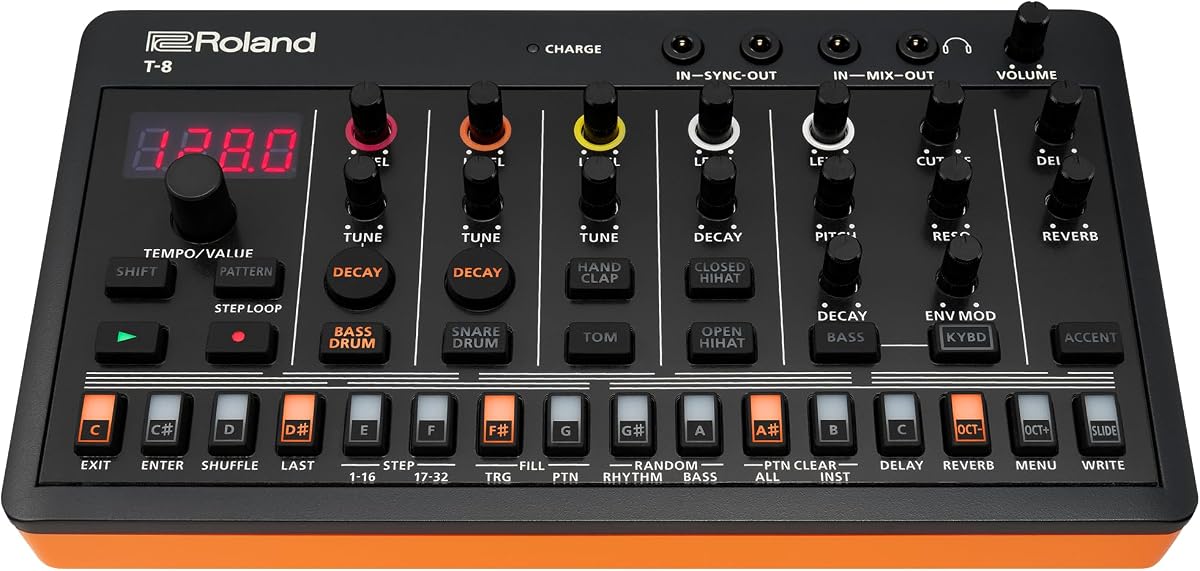
The Roland AIRA Compact T-8 is a miniature rhythm factory designed to put legendary creative magic in your hand. Rated 4.5 stars, it uses pristine TR drums and TB-303 bass sounds to let you jam and develop ideas anywhere instantly. Its intuitive design encourages spontaneous creativity over rigid programming.
We may earn a commission when you buy through this link, at no additional cost to you.
Features like flipping and dicing beats with hands-on tools stimulate ideas and put the fun back into your flow. The advanced rhythm programming includes probability and velocity controls for precise beat creation without complex menus. Built-in effects like delay and sidechain compression add polish to your tracks on the fly.
A notable limitation is the lack of custom sampling, meaning you are confined to the onboard TR sounds without importing your own. The pads are smaller than full-size controllers, which might be tricky for larger hands during intricate finger drumming. These constraints are acceptable for the sheer portability it offers.
Live performers and producers who value speed and inspiration will find this unit perfect for capturing ideas quickly. It serves well as a portable idea generator or a dedicated jam device for small setups. If you want a fun and instant way to create beats on the go, this is an excellent choice.
Tools like step loop and pattern shift allow you to change dynamics instantly during a performance or jam session.
Brings the essence of legendary TR and TB instruments into a tiny, battery-compatible device for unlimited mobility.
We may earn a commission when you buy through this link, at no additional cost to you.
The Behringer RD-9 Analog Drum Machine offers a solid balance of analog synthesis and practical features for modern producers. Rated 4.5 stars, it includes an analog filter wave designer to shape sounds creatively without needing external gear. It is a robust tool for those who want hardware control in their workflow.
We may earn a commission when you buy through this link, at no additional cost to you.
It comes with 10 individual outputs, allowing you to route each drum sound separately for detailed mixing and processing. The inclusion of MIDI In, Out, and Thru ensures it can easily sync with other gear in a studio or live set. This connectivity is crucial for larger system integration.
Compared to higher-end models, its sequencer is somewhat basic and lacks advanced digital manipulation features like step editing. It also does not offer built-in USB audio, requiring additional interfaces for computer recording. These trade-offs keep the price low but might limit advanced users looking for all-in-one solutions.
Producers who want a dedicated hardware drum machine with analog warmth and flexibility should consider this option. It is great for studio setups where individual outputs are needed for mixing. If you prefer a straightforward analog interface without digital bloat, the RD-9 provides excellent value.
The analog filter wave designer allows you to sculpt drum tones in real time for unique sonic textures.
With 10 individual outputs and MIDI connectivity, it integrates seamlessly into complex studio environments.
We may earn a commission when you buy through this link, at no additional cost to you.
The Behringer LM Hybrid Drum Machine introduces hybrid sampling capabilities to the budget-conscious producer seeking versatility. With a rating of 4.4 stars, it bridges the gap between traditional drum machines and modern sampling tools. It is an accessible entry point for those wanting to incorporate custom sounds easily.
We may earn a commission when you buy through this link, at no additional cost to you.
Its hybrid nature allows you to blend traditional drum synthesis with imported samples, expanding creative possibilities beyond preset kits. The compact design makes it easy to integrate into small desks or mobile setups without sacrificing essential controls. It offers a modern take on rhythm creation at a lower cost.
Users report occasional software quirks and limited documentation which can slow down the learning process for new owners. The sample import process might be less intuitive than on flagship models, requiring some patience. However, once set up, the unit performs reliably for beatmaking and practice.
Beginners or producers on a tight budget who need a hybrid workflow will appreciate this unit's flexibility. It is a practical choice for experimenting with different textures without high investment. If you want a portable sampler and drum machine combo that won't break the bank, this is worth considering.
Combines traditional drum synthesis with sampling to give you access to both classic tones and custom audio.
Compact design fits easily on desktops and allows for mobile production sessions anywhere with ease.
We may earn a commission when you buy through this link, at no additional cost to you.
The Behringer BMX Hybrid Sampling Drum Machine offers 24 pads and an 8-voice hybrid sampling engine for expressive performance. While it has features like sample recording and a 64-step sequencer, user satisfaction is lower with a 2.0 rating. It aims to provide extensive control but has seen mixed reception regarding usability.
We may earn a commission when you buy through this link, at no additional cost to you.
Key features include a dual-mode filter and wave designer which allow for shaping the sounds directly on the unit. The 24 pads provide a large surface for finger drumming and triggering samples live. This hardware focus is designed for tactile performance in live environments.
The lower rating points to potential setup complexities or inconsistencies in performance that may frustrate users. Documentation and software support might not meet expectations for a device with this level of capability. These issues can hinder the user experience compared to competitors with more polished interfaces.
Experienced users who prefer hardware-heavy workflows and can troubleshoot issues might find value in its extensive pad layout. It could serve as a specialized tool for live sampling if configured correctly. However, general users might want to consider alternatives with higher reliability ratings.
24 pads provide ample room for dynamic finger drumming and live sample triggering during performances.
8-voice hybrid engine combines synthesis and sampling for versatile sound creation options.
We may earn a commission when you buy through this link, at no additional cost to you.
The Behringer LmDrum Hybrid Sampling Drum Machine delivers an impressive 109 sounds and a perfect 5.0 rating. It combines sampling with a robust wave designer and dual-mode filter for comprehensive sound shaping capabilities. This unit is praised for its rich sound library and high user satisfaction scores.
We may earn a commission when you buy through this link, at no additional cost to you.
It features a 64-step sequencer that supports complex patterns for detailed beat programming. The inclusion of wave designer technology allows you to sculpt your samples with precision without external gear. Its hybrid nature offers flexibility that is rare in its price range.
The interface remains relatively basic compared to premium units, lacking advanced touchscreens or deep software integration. Connectivity options are limited to standard MIDI and audio, which might restrict integration with complex computer setups. These trade-offs are expected at this level but might limit pro users.
Producers seeking a high-satisfaction hybrid drum machine with a massive sound library will love this unit. It is ideal for those who value sound variety and tactile control over complex software features. If you want a reliable tool with a high rating for beatmaking, this is a strong contender.
Access to 109 different sounds gives you a wide range of options for creative drum arrangements.
Wave designer and dual-mode filter provide detailed control over your samples and synthesized sounds.
We may earn a commission when you buy through this link, at no additional cost to you.
The Akai Professional MPC XL Standalone Music Production Center is a powerhouse designed for full-scale beat creation without a computer. Rated 4.9 stars, it features an 8-core processor, 16GB RAM, and a 256GB SSD to handle complex projects effortlessly. It represents the top tier of standalone music production.
We may earn a commission when you buy through this link, at no additional cost to you.
Its expressive 3D-sensing pads allow for morphing and layering sounds with unprecedented expression. The 10.1-inch HD multi-gesture touchscreen provides intuitive visual control over your entire workflow. With comprehensive I/O and USB-C audio, it functions as a complete studio hub on its own.
The steep learning curve might be challenging for beginners, as the interface is dense with professional features. Its large footprint means it requires significant desk space, which could be an issue for small studios. However, for serious producers, these are acceptable trade-offs for its power.
Professional producers and serious hobbyists needing a standalone workstation will find this unit indispensable. It offers the depth required for complex tracks without needing external software. If you want a complete production center in one box with top-tier capabilities, this is the ultimate choice.
With no computer required, you can handle 16 audio tracks and 32 plugin instruments directly on the unit.
3D-sensing pads enable advanced performance techniques like layering and morphing for dynamic live shows.
We may earn a commission when you buy through this link, at no additional cost to you.
Selecting the right drum machine depends on your workflow, budget, and specific sonic needs. This guide outlines the key factors to consider before making a purchase.
Consider whether you need analog emulation or sample-based synthesis. Analog engines like ACB provide classic warmth while sampling offers unlimited variety for modern beats.
Prioritize units with flexible sound engines that match your genre and creative style.
Look at step counts, polyrhythmic support, and features like probability or velocity. Advanced sequencers help create dynamic patterns without manual editing.
Choose a sequencer that supports the complexity of rhythms you want to produce.
Decide if you need a desktop unit or a portable device. Compact models are great for travel while larger ones offer more physical controls.
Ensure the size fits your workspace or travel needs without sacrificing essential functions.
Check for MIDI, USB audio, and CV options to integrate with other gear. Interfaces with built-in audio recording simplify your workflow significantly.
Select connectivity options that match your studio setup for seamless routing.
If you want to use custom sounds, ensure the unit supports sample import. Some models allow resampling and slicing for advanced editing.
Look for robust sampling features if you plan to use personal audio files.
Evaluate the interface for intuitive controls versus complex menus. Touchscreens and dedicated knobs speed up workflow but may cost more.
Pick a machine that feels natural to use to maintain creative flow.
Metal chassis and sturdy pads are important for live performance. Budget models often use plastic which may wear over time with heavy use.
Invest in durable materials if you plan to transport the unit frequently.
Compare features against the price to ensure long-term value. High-end units offer better longevity while budget options are great for testing.
Balance initial cost with the features you will actually use in your daily production.
Start by connecting power and MIDI or USB to your audio interface to ensure the unit is recognized. Load a preset kit or your own samples to begin experimenting with patterns.
Use the step sequencer to input rhythms step by step and try adding variations like accents or velocity changes for dynamics. Save your patterns regularly to avoid losing creative ideas during sessions.
Keep the unit in a dry environment and avoid exposing it to dust or extreme heat. Clean the pads and knobs gently with a dry cloth to maintain responsiveness over time.
Analog machines use circuits to generate sounds which provides a warmer and more organic tone typical of vintage gear. Digital machines use samples and synthesis for more variety and stability while offering better editing options.
Yes, many modern drum machines support USB or SD card imports to load your own audio files. This allows for personalized sounds beyond the preset libraries.
Standalone models like the MPC XL and TR-1000 can function without a computer entirely. However some units require software for initial setup or editing.
Compact models like the Roland T-8 offer intuitive controls and instant results. They simplify the learning process while providing authentic sounds.
Yes, many units include performance features like step loops and effects suitable for live use. Ensure they have durable pads and sufficient output options.
Use MIDI clock or DIN sync cables to link devices for tempo synchronization. This allows different machines to play in time with each other.
Our top picks highlight versatile options like the Roland TR-6S and Behringer RD-8 for different needs and budgets. Each unit brings unique strengths to help you craft compelling rhythms efficiently.
Prioritize features that match your specific workflow whether it is portability or sound variety. Balancing these factors ensures you choose a tool that enhances your creativity.
Remember to check current availability and listings before finalizing your decision as offers change frequently. This helps you secure the best value for your investment today.