
Handheld Fish Finder Portable Fishing Kayak
4.2Editor score
Portable neck strap design
Deep water depth range
Battery save mode included
Finding the right tool to locate fish and measure water depth is essential for any angler. A reliable depth finder helps you understand the underwater landscape and improve your catch rates significantly.
We evaluated ten affordable models based on display clarity, sonar accuracy, and ease of installation. Each product was selected for its value proposition and performance in various water conditions.
Every pick includes key features and specifications to simplify your decision process. Please note that pricing and availability can change frequently, so check current listings before purchasing.
4.2Editor score
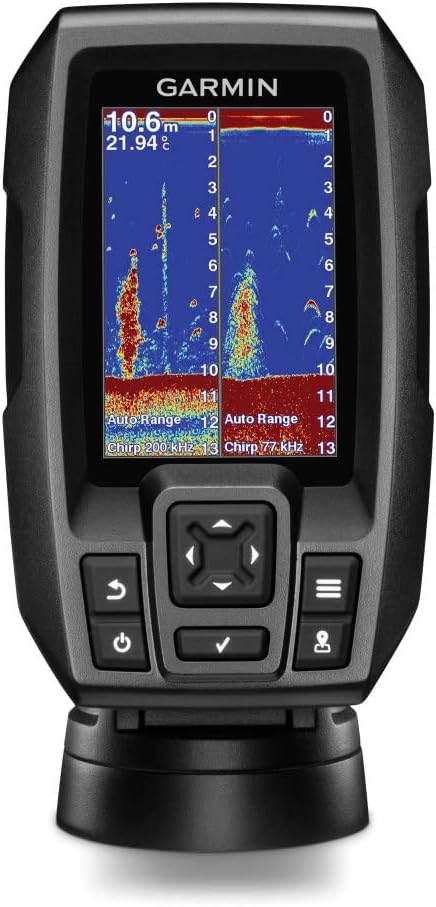
4.6Editor score

4.5Editor score
As an Amazon Associate we earn from qualifying purchases.
The following table provides a side-by-side overview of the key specifications and features for all ten models reviewed in this guide.


The Garmin Striker 4 stands out as the top choice for anglers seeking a reliable and affordable fishfinder. It receives high marks for its ClearVu scanning sonar which provides detailed underwater imaging.
We may earn a commission when you buy through this link, at no additional cost to you.
Key strengths include the GPS waypoint map that allows you to mark and navigate to specific fishing spots easily. The Chirp sonar technology ensures crisper fish arches and better target separation compared to standard sonars.
While the screen size is modest at 3.5 inches, the IPX7 water rating ensures durability against splashes and rain. The interface is simple with dedicated buttons reducing the learning curve for new users.
This model is ideal for recreational boaters and ice anglers who need dependable depth and fish data without breaking the bank. We recommend it as the best overall choice for most freshwater and saltwater environments.
ClearVu scanning sonar provides near photographic images of objects and fish structure in the water.
Built-in GPS allows you to mark waypoints and navigate to brush piles or docks effortlessly.
We may earn a commission when you buy through this link, at no additional cost to you.
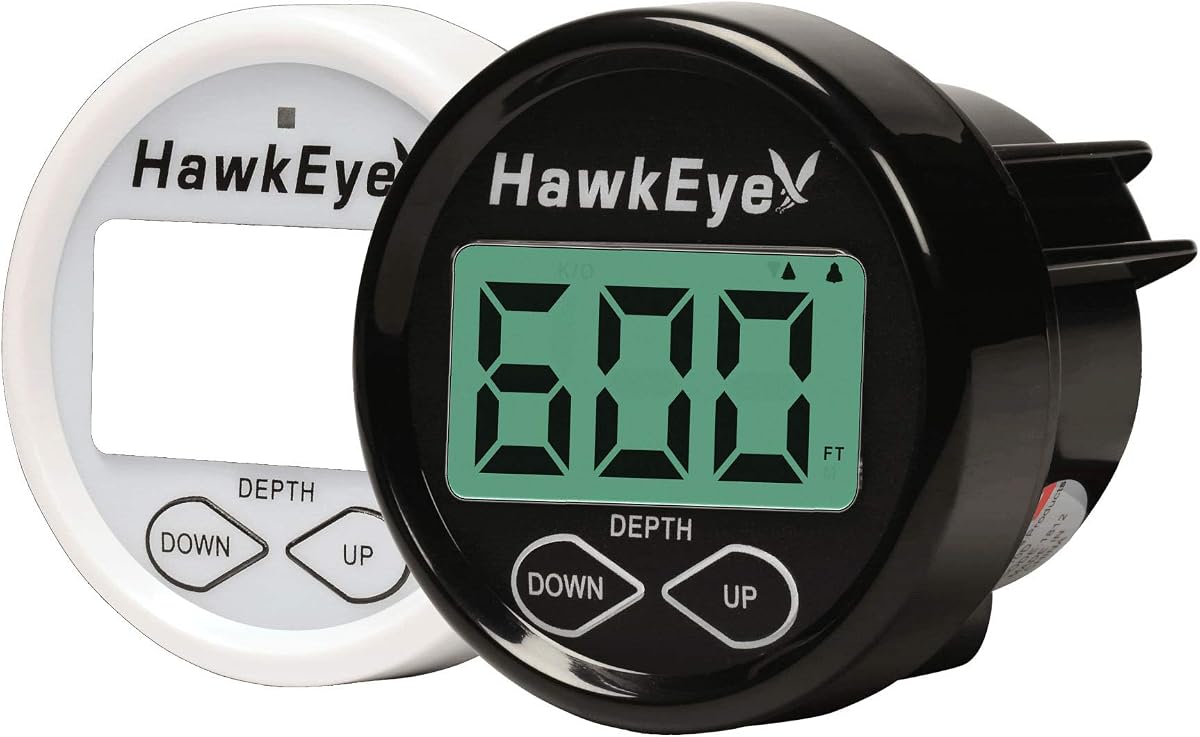
The DepthTrax 2B is designed specifically for in-dash installation and delivers uninterrupted depth readings even at speeds up to 60 mph. This makes it perfect for powerboats that need real-time data while moving quickly.
We may earn a commission when you buy through this link, at no additional cost to you.
Its polarized LCD icon display ensures spot-free viewing with or without sunglasses due to the no glare design. The 3-stage warning system signals shallow water alarms with audible tones and visual lights.
Installation options include a transom or glue-in transducer which can shoot through solid fiberglass or thin aluminum hulls. However users must ensure the hull is not cored for glue-in mounting.
We suggest this unit for boat owners who prioritize speed stability and a large dashboard display. It excels in environments where quick readings are necessary without stopping the vessel.
Delivers uninterrupted readings up to 60 mph making it ideal for fast powerboats.
No glare polarized display allows for clear viewing in bright sunlight conditions.
We may earn a commission when you buy through this link, at no additional cost to you.
The Hawkeye DT1H offers a straightforward solution for anglers who want basic depth and temperature readings without complexity. Its handheld format makes it easy to carry in a tackle box or pocket.
We may earn a commission when you buy through this link, at no additional cost to you.
It provides depth readings up to 300 feet and includes a temperature display which is vital for understanding fish behavior in varying conditions. The device is small enough to be used anywhere without mounting.
While it lacks advanced features like GPS or detailed sonar imaging its simplicity is its greatest strength. Users can turn it on and get immediate feedback with minimal learning curve required.
We recommend this model for casual anglers or those needing a secondary backup unit. It serves well for shore fishing or checking depths before deploying more complex gear.
Designed for ease of use with a straightforward interface that anyone can operate.
Small handheld size ensures it can be taken to any fishing spot effortlessly.
We may earn a commission when you buy through this link, at no additional cost to you.
This handheld fish finder is engineered for portability and comes with a neck strap so you can wear it around your neck while managing your kayak. It runs on four AAA batteries and offers up to five hours of continuous use.
We may earn a commission when you buy through this link, at no additional cost to you.
It detects fish location and water depth accurately with a range up to 328 feet and a 45 degree beam angle. The device includes five user selectable sensitivity settings to adapt to different water conditions.
Although it relies on disposable batteries the battery save mode helps extend usage time during long trips. The simple toss and turn on operation means there is no complex setup required before fishing.
We identify this as the best budget option for kayakers and dock anglers who need reliable data without a heavy investment. Its versatility in fresh and salt water makes it a valuable tool for many users.
The included strap allows you to wear the unit while busy on your kayak for quick access.
Five selectable sensitivity levels let you adjust readings for clear or turbid water.
We may earn a commission when you buy through this link, at no additional cost to you.
The LUCKY FFC1108 is a portable fish finder that can be attached to the hull of a kayak or boat to monitor changing water depths. Its castable design allows you to toss the transducer into water for immediate readings.
We may earn a commission when you buy through this link, at no additional cost to you.
It shows approximate fish location and depth along with weeds and rocks on the bottom. The display includes a backlight for visibility in darkness and allows switching between feet and meters easily.
Five levels of sensitivity adjustment make it suitable for both clear and turbid water environments. The battery life supports continuous work for at least four to five hours on new batteries.
We recommend this model for kayak owners who want a lightweight solution that does not require permanent installation. It is also an excellent gift option for friends or family who enjoy fishing.
The transducer can be cast or attached allowing flexibility in how you use it.
Backlight ensures the screen remains readable in low light conditions.
We may earn a commission when you buy through this link, at no additional cost to you.
The Humminbird PiranhaMAX 4 features dual beam sonar allowing you to choose between a narrow beam for detail or a wide beam for coverage. This flexibility helps identify fish and structure efficiently without advanced settings.
We may earn a commission when you buy through this link, at no additional cost to you.
It includes a tilt and swivel mount which lets you adjust the viewing area angle quickly to suit your boat layout. The transducer is mounted to the transom and provides reliable data for small boats.
While it lacks GPS mapping the dual beam capability ensures you get a clear picture of what is below the boat. The unit comes with a one year limited warranty providing peace of mind for buyers.
We suggest this unit for users who need a proven brand with reliable sonar technology. It is a solid choice for those prioritizing accurate depth and fish identification over mapping features.
Dual beam sonar lets you switch between narrow detail and wide coverage areas.
Tilt and swivel mount allows for easy adjustment of the display angle.
We may earn a commission when you buy through this link, at no additional cost to you.
The Lowrance Eagle features a four inch IPS portrait screen that stays clear in bright sunlight and offers wide viewing angles. This display quality ensures you can see data easily even when wearing polarized sunglasses.
We may earn a commission when you buy through this link, at no additional cost to you.
Auto-Tuning Sonar automatically provides optimized settings so you can focus on fishing rather than manual adjustments. The included 200 kHz Bullet Skimmer delivers a broad 44 degree beam ideal for small boats.
Simple fish identification allows you to view fish icons with depth numbers without needing complex sonar interpretations. The twist-lock connector makes connecting and removing the display fast for limited spaces.
We recommend this model for users who prioritize screen clarity and ease of use. The auto-tuning feature makes it accessible for beginners while still offering reliable performance for experienced anglers.
IPS screen technology ensures the display remains visible in direct sun.
Auto-Tuning Sonar handles settings adjustments for better focus on catching fish.
We may earn a commission when you buy through this link, at no additional cost to you.
This portable depth finder detects and displays water depth and fish group data along with water temperature. The depth data updates four times per second providing a responsive view of the underwater environment.
We may earn a commission when you buy through this link, at no additional cost to you.
It features a durable water-resistant construction that can withstand splashes and even submersion up to 100 feet. This makes it useful not just for fishing but also for snorkeling or diving activities.
The device includes a two-color lure fish lamp which can help attract light sensitive fish to your area. This feature sets it apart from basic models that lack any visual attraction tools.
We suggest this unit for anglers who want a compact multi-tool for various water activities. Its resistance and temperature readings make it a practical accessory for lake or river trips.
Can be submerged up to 100 feet making it robust for diverse aquatic use.
Built-in lamp provides a two-color lure to potentially attract fish.
We may earn a commission when you buy through this link, at no additional cost to you.
The LUCKY MT-202 offers wireless control and operation with a massive 853 feet range one of the longest on the market. This allows you to cast your sensor into deep channels or weed beds without wires.
We may earn a commission when you buy through this link, at no additional cost to you.
It reveals the exact depth of fish and their location relative to structure helping you turn guesswork into guaranteed success. The 3.5 inch horizontal LCD displays fish icons with depth numbers next to them.
The display scrolls from right to left showing a continuous history of what passed under the sensor so you can track fish movement. It is designed to be pocket sized and lighter than a water bottle for easy carrying.
We recommend this model for tech savvy anglers who want the convenience of wireless scanning. The rechargeable battery and detailed readouts make it a premium choice for serious fishing trips.
No wires means you can cast the sensor anywhere without being tethered to the boat.
Scrolling display shows a history of fish and structure you have floated over.
We may earn a commission when you buy through this link, at no additional cost to you.
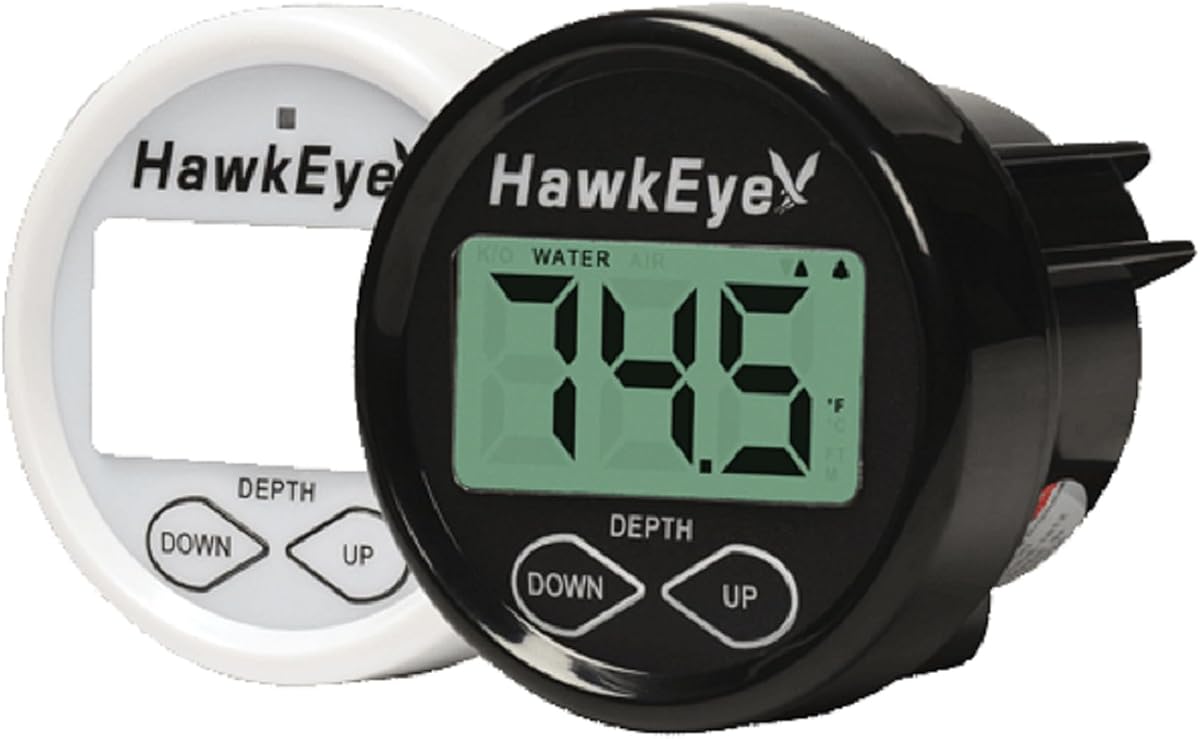
The HawkEye DT2BX-TM delivers uninterrupted depth readings and displays both water and air temperature readings in Fahrenheit or Celsius. This dual temperature feature helps you monitor environmental changes that affect fish behavior.
We may earn a commission when you buy through this link, at no additional cost to you.
Its polarized LCD icon display with storage sun cover allows for spot free viewing without glare. The 3-stage warning system signals alarms with audible tones and lights giving clear notifications for shallow water.
Installation requires a two inch hole for flush mounting which integrates neatly into your boat dashboard. The transducer includes a thirty foot cable providing flexibility for transom mounting on your vessel.
We suggest this unit for boat owners who want an integrated dashboard display with temperature monitoring. It is reliable for regular navigation and offers a classic depth sounder experience with modern updates.
Displays both air and water temperatures to help you track environmental shifts.
Flush mount design with a bezel that looks clean and professional on the dash.
We may earn a commission when you buy through this link, at no additional cost to you.
Choosing the right depth finder requires considering several factors to match your specific fishing style and environment.
A clear and readable display is crucial because you need to see the data in bright sunlight. Larger screens generally provide better visibility but may require more space on your boat.
Look for features like polarized LCD screens or backlights that ensure visibility day and night.
Higher frequencies like 200 kHz offer better detail while lower frequencies offer better depth penetration. Chirp or dual beam sonars provide more accurate fish arches and structure detail.
Consider if you need basic depth readings or detailed imaging for fish identification.
Mounting options determine how permanent the installation is and how it fits your vessel. Handheld and castable models are portable while in-dash models offer a permanent solution.
Choose a mount type that suits your boat style and how often you move the device.
Battery life impacts how long you can fish without interruption. Some units use disposable batteries while others have rechargeable options.
Ensure the power source matches your trip duration and your ability to recharge or replace batteries.
The maximum depth range determines where you can fish with the device. Some units work up to 300 feet while others reach deeper waters.
Check the maximum depth rating to ensure it covers the typical water depth you encounter.
Extra features such as GPS waypoint maps or temperature sensors add value. Temperature data is vital for understanding fish activity levels in different conditions.
Decide if you need these features to justify the cost or if basic depth is enough.
Always ensure the transducer is properly submerged and aligned horizontally for accurate readings. Toss it into water and wait a few seconds for the sonar to stabilize.
Clean the device and transducer after use especially if you have used it in salt water. Rinse with fresh water to prevent corrosion and extend the device lifespan.
Store the unit in a cool dry place and remove batteries if not using for long periods. This prevents battery leaks from damaging the internal electronics.
For beginners the Garmin Striker 4 offers an easy interface and GPS which simplifies navigation and data reading. It balances affordability with essential features without overwhelming complexity.
Yes most models like the LUCKY kayak finder and depthTrax are rated for both fresh and salt water. Just remember to rinse the device after salt water use to prevent corrosion.
Handheld models may struggle with speed but in-dash units like DepthTrax are built for high speeds up to 60 mph. Ensure you choose a model with appropriate speed ratings for your vessel.
Maintain by rinsing with fresh water after every use and checking for cracks or scratches. Store it in a safe place away from direct sunlight when not in use.
Most cheap depth finders have a maximum depth between 300 and 600 feet. Some models like Garmin reach 1600 feet in freshwater depending on conditions.
GPS is not strictly necessary but helps mark spots for future visits. If you fish in familiar waters a basic depth finder may be enough.
We reviewed ten affordable depth finders ranging from basic handhelds to advanced wireless models. Each offers distinct benefits depending on whether you boat fish kayak fish or fish from shore.
Prioritize display clarity and battery life to ensure you have reliable data when you need it most. The right device can improve your efficiency and enjoyment on the water.
Please check current prices and availability as they may change over time. We hope this guide helps you find the perfect depth finder for your needs.