
SIRUI Night Walker 35mm
4.4Editor score
T1.2 large aperture
Lightweight 500g body
Ideal for low-light scenes
This guide compares the top ten cine lenses for filmmakers, covering optical performance, build quality, and mounting options to help you choose the right tool
Choosing the right cine lens is crucial for capturing professional-quality footage that stands out. These specialized lenses offer smooth focus transitions, consistent T-stops, and robust build quality designed for rigorous video production environments.
We have evaluated ten top-rated options based on optical clarity, aperture range, mount compatibility, and overall value. Each product was selected for its ability to deliver cinematic imagery across various camera systems and shooting conditions.
Every pick highlights key strengths and trade-offs to help you make an informed decision. Note that availability and pricing may fluctuate, so verify current details before purchasing to ensure you get the best deal available.
4.4Editor score
5.0Editor score

4.9Editor score
This side-by-side comparison highlights the key specifications and strengths of each lens to help you quickly identify the best fit for your specific camera system and shooting needs.




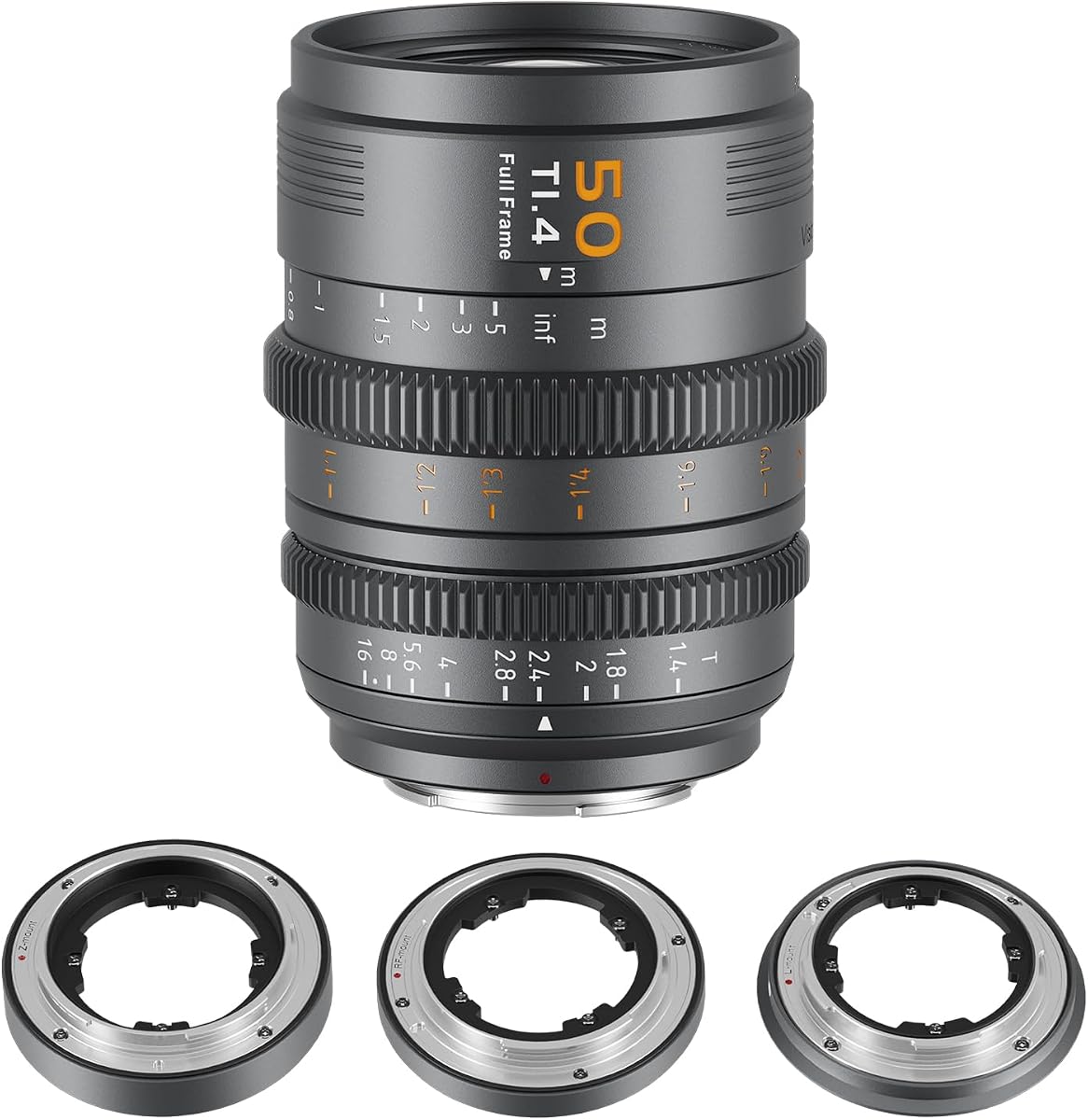
The SIRUI VP-1 Vision Prime 1 50mm stands out as a top contender in the cine lens market. Rated 5.0 by users, it delivers exceptional image quality suitable for high-resolution projects including 8K footage.
We may earn a commission when you buy through this link, at no additional cost to you.
Its T1.4 aperture allows for superb low-light performance and beautiful bokeh. The interchangeable mount system lets you switch between E, RF, Z, and L mounts easily, offering flexibility across different camera systems without buying multiple lenses.
While it is a premium option, the build quality justifies the investment. The durable aluminum alloy body keeps weight manageable at around 600g, making it ideal for travel or gimbal work where every gram counts.
This lens is perfect for filmmakers who need versatility and top-tier optics. Whether you are shooting documentaries or narrative films, the consistency and sharpness provided by this lens make it a reliable choice for any kit.
The ability to swap mounts means one lens can serve multiple camera bodies, saving money and storage space while maintaining optical integrity across platforms.
Engineered with advanced glass elements, this lens minimizes aberrations and distortion, ensuring every pixel counts when shooting in ultra-high resolutions.
We may earn a commission when you buy through this link, at no additional cost to you.
The ROKINON CINE DS T1.5 Kit provides a comprehensive solution for serious filmmakers needing a full range of focal lengths. With ratings of 4.9, it offers consistent performance across the 24mm to 85mm range.
We may earn a commission when you buy through this link, at no additional cost to you.
All lenses are color matched and share unified gear and aperture positions. This consistency makes swapping lenses during a shoot seamless and ensures uniform color tones across different shots in your production.
The manual focus and de-clicked aperture rings offer precise control for video. While the kit is heavy, the build quality is robust enough for professional set use where durability is paramount over portability.
This kit is ideal for production houses or serious hobbyists investing in a Canon EF system. The T1.5 aperture provides excellent low light capability, making it a versatile choice for diverse shooting environments.
Matching lenses across a kit ensures that your footage maintains a consistent look without extensive color grading between different focal lengths.
De-clicked apertures allow for smooth exposure transitions during video, a crucial feature for professional cinematography workflows.
We may earn a commission when you buy through this link, at no additional cost to you.
The SIRUI Night Walker 35mm offers incredible value for budget-conscious creators. Rated 4.4, this lens delivers a large T1.2 aperture that shines in low-light situations without needing high ISO settings.
We may earn a commission when you buy through this link, at no additional cost to you.
Its lightweight design at around 500g makes it easy to stabilize on gimbals for handheld shoots. The bokeh quality is pleasing and helps separate subjects from backgrounds effectively for cinematic storytelling.
While it is designed for S35 sensors, the optics are sharp and minimize focus breathing. This makes it a strong contender for vloggers and independent filmmakers using APS-C mirrorless cameras like Sony A6000 series.
If you need a fast prime lens without breaking the bank, this is an excellent choice. It provides the essential features needed for professional-looking footage while keeping costs manageable for entry-level productions.
The T1.2 aperture allows capturing clear images in dim environments, reducing noise and preserving detail in challenging lighting conditions.
Weighing only 500g, this lens is perfect for run-and-gun shooting where carrying heavy gear is not an option.
We may earn a commission when you buy through this link, at no additional cost to you.
The Rokinon 85mm T1.5 DS is tailored for portrait work and tight shots. With a 4.5 rating, it offers a wide aperture that creates soft backgrounds while maintaining sharp focus on the subject.
We may earn a commission when you buy through this link, at no additional cost to you.
Its 8 blade iris contributes to attractive bokeh circles which are pleasing in cinematic shots. The color matching with other Rokinon DS lenses ensures consistency if you use multiple lenses from the same line.
The minimum focusing distance of 3.6 feet allows for intimate framing. While it is a robust lens, it is heavier than newer designs, which might be a consideration for gimbal work over long periods.
This lens is a great choice for filmmakers who need a specific focal length for interviews or portraits. The build quality and optical performance provide professional results at a competitive price point.
The 8 blade iris ensures smooth circular bokeh, enhancing the cinematic look of your footage by creating beautiful background separation.
Matching with other Rokinon DS lenses simplifies workflow by keeping gear positions and color tones consistent across your entire lens set.
We may earn a commission when you buy through this link, at no additional cost to you.
The Rokinon 35mm T1.5 DS is a versatile choice for general shooting. Rated 4.6, it covers a focal length that mimics the human eye, making it ideal for walk-around documentary or narrative work.
We may earn a commission when you buy through this link, at no additional cost to you.
Its aperture range from T1.5 to T22 provides flexibility in different lighting conditions. The color matched design ensures it pairs well with other lenses in the DS line for a cohesive look.
The 77mm filter size is larger than some competitors, requiring specific filters. However, the optical quality is sharp, and the manual focus ring is smooth for precise adjustments during video capture.
If you need a reliable all-rounder for your Canon EF mount, this lens fits the bill. It offers professional features at an accessible price, making it a staple for many content creators.
The 35mm focal length is perfect for general storytelling, capturing environments and subjects with a natural perspective that feels immersive.
Designed to match the DS line, this lens ensures seamless gear swaps and consistent color science across your production kit.
We may earn a commission when you buy through this link, at no additional cost to you.
The SIRUI Night Walker 24mm offers a wide perspective perfect for landscapes and environmental shots. Rated 4.3, it delivers a T1.2 aperture that excels in low light while providing smooth focus transitions.
We may earn a commission when you buy through this link, at no additional cost to you.
With a minimum focus distance of 0.3m, you can capture immersive close-ups that emphasize detail. The focus rotation allows for precise manual adjustments, making it ideal for video production workflows.
The lens is designed for RF mount cameras like Canon EOS R7 and RED Komodo. While it is an S35 lens, the quality remains high, and the 270 degree focus rotation is a professional feature.
This lens is a great addition for shooters needing a wide angle with excellent low light performance. Its affordability and optical quality make it a compelling choice for indie filmmakers.
A 24mm focal length captures broad scenes while keeping subjects clear, perfect for setting the scene in your narrative films.
Being able to focus as close as 0.3m adds depth and visual impact to detail shots and tabletop scenes.
We may earn a commission when you buy through this link, at no additional cost to you.
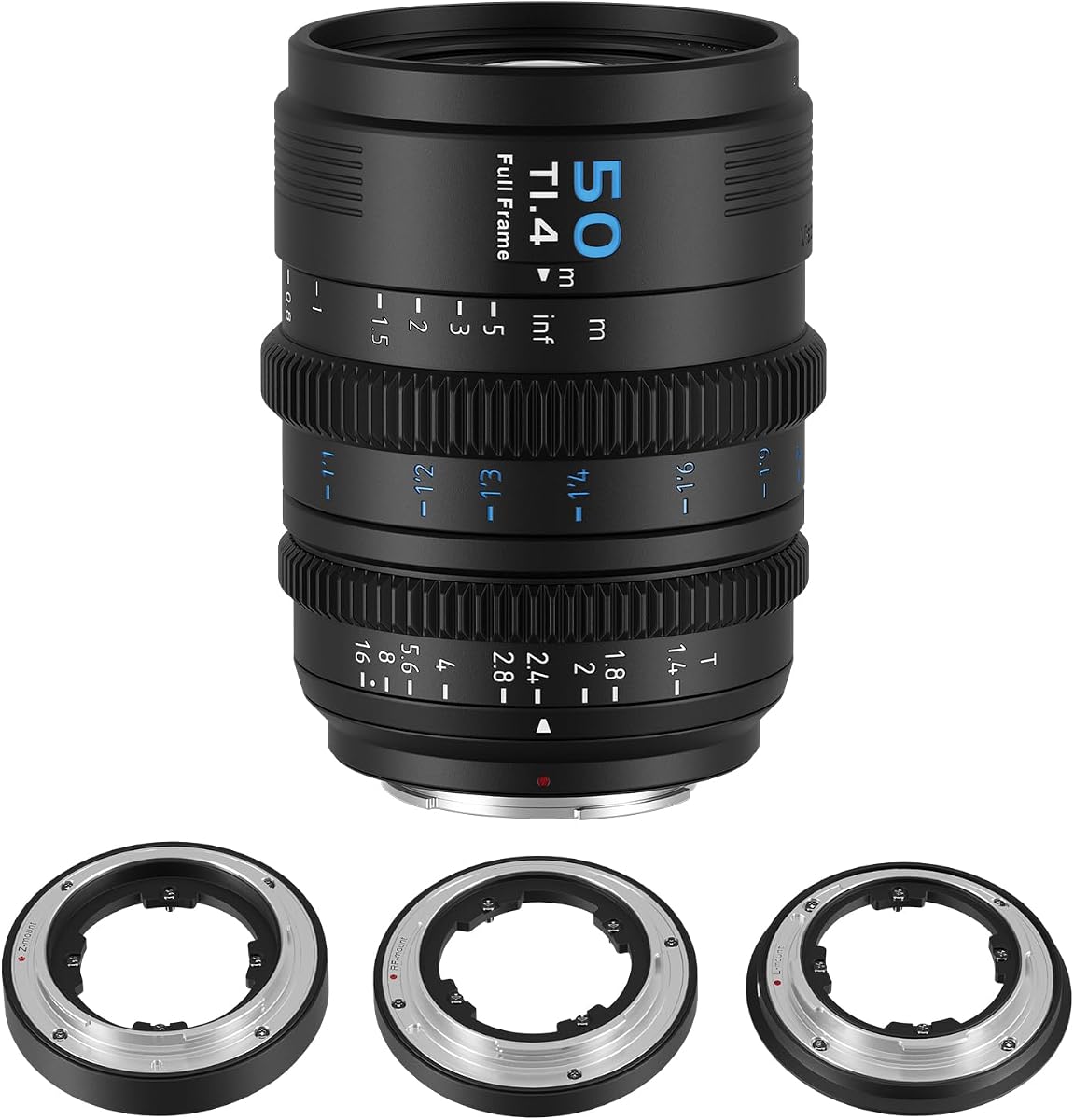
The SIRUI VP-1 Vision Prime 1 50mm is a versatile full-frame option. While ratings vary, the 8K optimization and interchangeable mount system offer significant value for multi-camera shooters.
We may earn a commission when you buy through this link, at no additional cost to you.
Its aluminum body ensures durability without adding too much weight. The consistent color tone across the VP-1 line makes it easy to switch lenses without noticeable shifts in image quality.
The T1.4 aperture is fast enough for most low-light scenarios. Focus rotation is smooth, allowing for creative depth-of-field control that enhances the cinematic quality of your video footage.
This lens is suitable for those transitioning into cine lenses. It offers high-end features at a competitive price point, making professional quality more accessible to a broader audience.
Designed to handle high-resolution sensors, this lens minimizes chromatic aberrations and ensures sharpness across the entire frame.
Swap mounts easily between systems, giving you flexibility to use the same optics across Sony, Canon, Nikon, and Panasonic cameras.
We may earn a commission when you buy through this link, at no additional cost to you.
The SIRUI Night Walker 24mm in M4/3 mount is a standout for Micro Four Thirds users. With a 4.9 rating, it provides sharp optics and a large T1.2 aperture perfect for low-light filmmaking.
We may earn a commission when you buy through this link, at no additional cost to you.
Its lightweight design at 500g makes it easy to carry on long shoots. The lens construction ensures protection of optical elements while maintaining a premium aesthetic feel in hand.
This lens is ideal for cameras like the BMPCC4K and GH6. The optical performance minimizes focus breathing and aberrations, ensuring your footage remains crisp and professional throughout the scene.
If you use M4/3 systems, this lens offers professional quality without the weight of larger formats. The fast aperture allows for creative control over depth of field even in challenging light.
Designed specifically for cameras like BMPCC4K and GH series, this lens offers seamless integration and optimal optical performance.
Advanced coatings and element design reduce flare and aberrations, delivering clean and sharp images suitable for high-end production.
We may earn a commission when you buy through this link, at no additional cost to you.
The Rokinon DSX85 85mm is a reliable portrait lens. Rated 4.7, it features a T1.5 aperture that creates excellent separation between subjects and backgrounds in a variety of lighting conditions.
We may earn a commission when you buy through this link, at no additional cost to you.
Its multi-coated glass minimizes flare and enhances contrast. The 9 aperture blades contribute to smooth bokeh rendering, making it a favorite for interviews and close-up shots.
This lens is a bit heavy but sturdy enough for fixed setups. The manual focus ring is calibrated for video, allowing precise control over focus pulling during dynamic scenes.
If you need a dedicated portrait lens for your Canon EF setup, this is a strong candidate. The price point is accessible, making it a great option for budget-friendly cinematic projects.
The combination of T1.5 aperture and 9 blades creates creamy backgrounds that highlight your subject beautifully in any scene.
Ultra multi-coated glass ensures that flare is minimized, maintaining contrast and color accuracy even in backlit situations.
We may earn a commission when you buy through this link, at no additional cost to you.
The DZOFILM Pictor 50-125mm offers a parfocal design, which is rare at this price point. Rated 5.0, it maintains focus across the entire zoom range, essential for dynamic camera movements.
We may earn a commission when you buy through this link, at no additional cost to you.
With an aperture of T2.8 to T25, it provides flexibility in exposure. The 16-slat iris allows for smooth bokeh and precise exposure control that matches professional standards.
This lens is compatible with both PL and Canon EF mounts, making it versatile for different camera systems. The minimal focus breathing ensures that the image doesn't shift significantly when zooming.
If you require a zoom lens that acts like a prime, this is an excellent choice. It brings high-end cine lens features to shooters who need flexibility without sacrificing optical performance.
The ability to maintain focus while zooming eliminates the need for constant refocusing during shots, saving time in production.
Careful optical design minimizes focus breathing, ensuring your composition stays consistent throughout focus and zoom transitions.
We may earn a commission when you buy through this link, at no additional cost to you.
Selecting the right cine lens depends on several factors including mount, aperture, and build quality. Here are key aspects to consider when making your decision.
Ensure the lens fits your camera's mount system. Some lenses offer interchangeable mounts for flexibility across different brands like Sony, Canon, or Nikon. Matching the mount ensures proper registration and focus accuracy.
Always verify the mount type before purchasing to avoid needing expensive adapters.
Aperture affects light intake and depth of field. A lower T-stop like T1.2 or T1.5 allows for low-light shooting and blurry backgrounds. Faster apertures are crucial for indoor or night shoots.
Prioritize a lower T-stop if you shoot frequently in dim environments.
Choose a focal length that suits your shooting style. Wide angles like 24mm are great for landscapes, while 85mm is ideal for portraits. Consider buying kits if you need multiple focal lengths.
Match focal lengths to your typical subject distance and framing needs.
Cine lenses should be durable for regular use. Aluminum housings are robust but heavier. Check for smooth focus and aperture rings that facilitate manual control during video capture.
Look for sturdy materials if you plan to use the lens on gimbals or in rough conditions.
Sharpness and minimal aberrations are critical for high-resolution cameras. Look for lenses designed for 8K or 4K to ensure edge-to-edge clarity. Coatings reduce flare and improve contrast.
Check reviews regarding sharpness at wide apertures before buying.
Video requires smooth focus pulling. Look for lenses with long focus rotation angles like 270 degrees. This allows precise control without overshooting focus points during a shot.
Ensure the focus ring is smooth and geared for follow focus accessories if needed.
Full-frame lenses cover larger sensors while S35 lenses cover smaller ones. Using the wrong coverage can lead to vignetting or crop factors you did not intend. Match the lens to your camera's sensor.
Verify if the lens covers your specific sensor size fully for best results.
Cine lenses range from affordable to high-end. Balance your budget with the features you need. Entry-level options are great for starters while professional kits offer more consistent optical quality.
Determine how much you can spend and prioritize features accordingly.
Always clean the front and rear glass elements with a microfiber cloth. Avoid touching the glass with fingers to prevent smudges that affect image quality during shoots.
Store your lenses in a dry and cool place when not in use. Use lens caps and caps for the rear mount to protect against dust and scratches which can degrade performance over time.
When shooting, ensure the lens is securely mounted on the camera. Check alignment and calibration regularly to maintain focus accuracy and prevent accidental disconnection during movement.
Photo lenses focus on autofocus and high-speed photography capabilities. Cine lenses prioritize manual focus precision, smooth aperture rings, and consistent build quality for video production. They often feature T-stops for accurate exposure control.
Yes, many cine lenses have fast T-stops like T1.2 or T1.5 which allow more light into the camera. This helps capture clear images in dim environments without increasing ISO and introducing noise to the footage.
Absolutely, cine lenses work on still cameras as well. However, they lack autofocus which might be a drawback for photography. They are great for manual focus stills work or hybrid shooters.
A follow focus system helps achieve precise and repeatable focus pulls. While not strictly necessary for all uses, it is highly recommended for professional video work where accuracy during movement is critical.
Parfocal lenses maintain focus while zooming, which is essential for dynamic shots. Varifocal lenses require refocusing when zooming. Parfocal lenses are more expensive but preferred for high-quality video production workflows.
Yes, Rokinon offers excellent value for beginners due to affordable prices and decent optical quality. They provide a great entry into manual focus cinema without the high cost of premium brands.
Cine lenses feature robust metal housings and complex optical structures designed for durability. The weight adds stability during handheld shooting and ensures the lenses withstand the rigors of professional production.
Some lenses like those from SIRUI offer interchangeable mounts. Others are fixed. Check the product details specifically to see if the mount is swappable before purchasing to ensure compatibility.
We have reviewed ten excellent options ranging from budget-friendly primes to professional kits. Each lens offers unique strengths depending on your camera system and specific shooting requirements.
Prioritize aperture speed and build quality to ensure your gear lasts. Also consider the mount compatibility to avoid future investment in adapters or incompatible hardware.
Prices and availability can change over time. Check current deals and verify stock before finalizing your purchase to get the best value for your filmmaking budget.