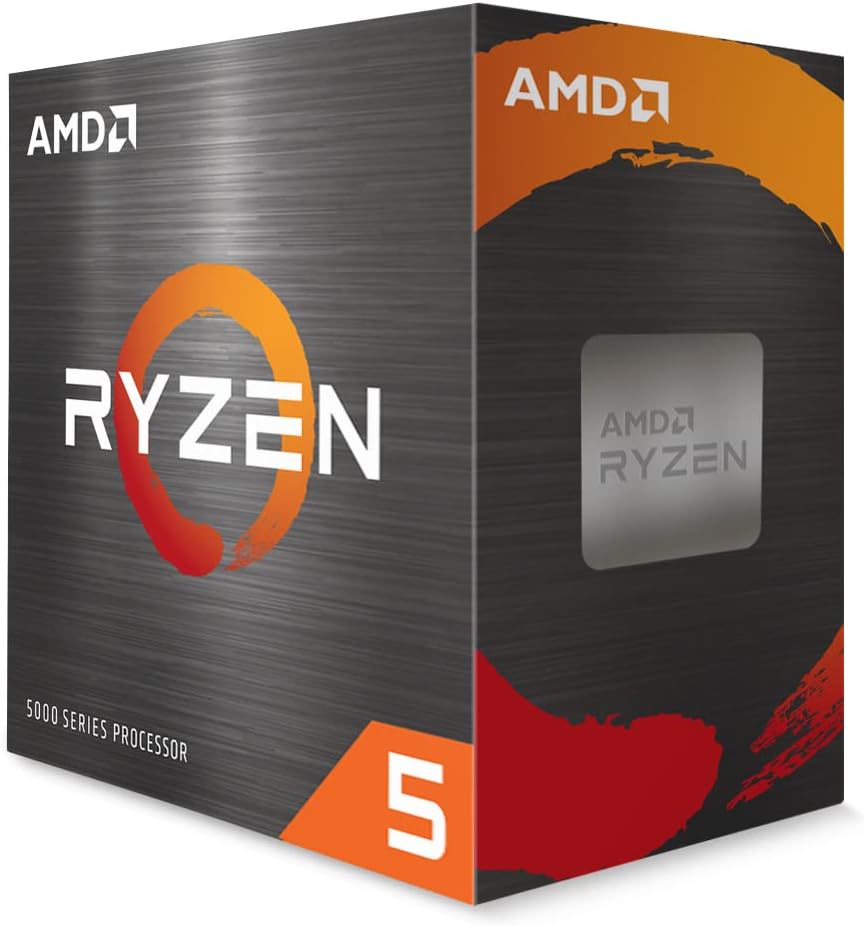
AMD Ryzen 5 5500
4.7Editor score
Affordable price point
Includes cooling solution
Suitable for basic tasks
This guide compares the top CPUs for Excel and Data Analysis to help you choose the best processor for performance and efficiency in 2026.
Selecting the right CPU for Excel and Data Analysis is crucial for professionals who rely on complex spreadsheets and large datasets daily. A powerful processor ensures smooth calculations and faster processing times.
We evaluated ten leading processors based on core counts, clock speeds, and architectural efficiency. Our analysis focuses on how each CPU handles multitasking and computational workloads typical in data environments.
Each pick highlights specific strengths for different user needs and budgets. Note that availability and pricing may change over time, so verify current details before making your final decision.
4.7Editor score

4.8Editor score

4.8Editor score
The following table provides a side-by-side comparison of all ten processors evaluated in this guide. It highlights key specifications to help you quickly identify the best fit for your needs.


The Intel Core Ultra 9 285K stands out as a powerhouse for demanding data analysis tasks. With a high rating of 4.6, it delivers reliable performance for complex computational workloads.
We may earn a commission when you buy through this link, at no additional cost to you.
Its hybrid architecture distributes workloads efficiently, ensuring that critical Excel operations run smoothly. The high clock speeds further enhance responsiveness, making it ideal for professionals who need quick results.
While it does not include a thermal solution, the performance gains justify the extra investment in cooling. Users should ensure they have a compatible motherboard to fully utilize its capabilities.
This processor is best suited for power users and professionals who prioritize speed and efficiency in their daily workflows. It represents the top tier of available options.
The hybrid architecture ensures that intensive tasks are handled by the most appropriate cores for maximum efficiency.
Support for PCIe 5.0 and 4.0 ensures compatibility with the latest high-speed storage and peripheral devices.
We may earn a commission when you buy through this link, at no additional cost to you.
The AMD Ryzen 7 9800X3D offers an impressive balance of performance and efficiency. Its high rating of 4.8 reflects user satisfaction with its capabilities in various tasks.
We may earn a commission when you buy through this link, at no additional cost to you.
With 96MB of L3 cache, this processor excels at handling large datasets typical in data analysis. The Zen 5 architecture provides a significant uplift in instruction per cycle performance.
Users may need to purchase a separate cooler as one is not included. However, the thermal performance is generally better than previous generations, allowing for stable operation.
This CPU is ideal for users who value power efficiency alongside strong performance. It is a strong choice for those building a modern system with long-term upgrade plans.
The 96MB L3 cache allows for faster data access, reducing latency during complex calculations.
Built on Zen 5 technology, this processor delivers improved efficiency and performance per watt.
We may earn a commission when you buy through this link, at no additional cost to you.
The Intel Core i9-14900K is designed for users who need the fastest possible clock speeds. It features a leading max clock speed of up to 6.0 GHz for rapid responsiveness.
We may earn a commission when you buy through this link, at no additional cost to you.
With 24 cores and 32 threads, it handles multitasking with ease. This makes it suitable for users who run multiple applications alongside heavy Excel workloads.
Compatibility with Intel 600 and 700 series motherboards is broad, though some may require a BIOS update. Integrated graphics provide basic display capabilities without needing a discrete card.
This processor is perfect for enthusiasts who prioritize raw speed. It delivers high frame rates and smooth performance, making it a versatile choice for various demanding tasks.
Reaching up to 6.0 GHz ensures that single-threaded tasks complete almost instantly.
Support for both DDR4 and DDR5 allows for flexible memory configurations based on budget and needs.
We may earn a commission when you buy through this link, at no additional cost to you.
The AMD Ryzen 5 9600X offers excellent value for those seeking modern performance without breaking the bank. It has a high rating of 4.8 indicating strong user satisfaction.
We may earn a commission when you buy through this link, at no additional cost to you.
With 6 cores and 12 threads, it handles everyday data analysis tasks efficiently. The unlocked nature allows for overclocking to push performance further if desired.
Note that a cooler is not included, which is a consideration for budget builds. However, the performance per watt is excellent, making it a smart choice for new systems.
This processor is ideal for budget-conscious users who still want access to the latest AM5 platform. It provides a solid foundation for future upgrades.
Being part of the AM5 ecosystem ensures longevity and compatibility with future CPU upgrades.
The unlocked status allows enthusiasts to tweak settings for marginal performance gains.
We may earn a commission when you buy through this link, at no additional cost to you.
The Intel Core Ultra 7 270K Plus combines efficiency with high performance. Its hybrid architecture is optimized for distributing workloads effectively across cores.
We may earn a commission when you buy through this link, at no additional cost to you.
Users will appreciate the support for fast DDR5 memory speeds. This ensures that data transfers are rapid, which is beneficial for large spreadsheets and datasets.
The processor is unlocked for performance tuning when paired with compatible chipsets. This makes it a flexible choice for power users who want to customize their setup.
This CPU is best suited for those who want a balance of performance and efficiency. It is a great option for creators and professionals who need reliability.
Support for DDR5 up to 7200 MT/s significantly boosts data throughput for demanding applications.
The hybrid design ensures background tasks do not interfere with primary computational workloads.
We may earn a commission when you buy through this link, at no additional cost to you.
The AMD Ryzen 9 9950X is a top-tier processor designed for the most demanding workloads. It offers an impressive core count and thread count for parallel processing.
We may earn a commission when you buy through this link, at no additional cost to you.
With a max boost clock of 5.7 GHz, it delivers exceptional single-core performance. This is crucial for applications that rely heavily on single-threaded speed.
While it recommends a liquid cooler due to its power output, the performance gains are significant. It is a premium option for those who need the best available.
This processor is ideal for professional environments where time is critical. It ensures that complex calculations are completed quickly and efficiently.
With 16 cores and 32 threads, this CPU can handle multiple heavy tasks simultaneously without slowdown.
The Zen 5 architecture provides improved efficiency and performance compared to previous generations.
We may earn a commission when you buy through this link, at no additional cost to you.
The Intel Core i7-12700KF is a reliable choice for mid-range builds. It offers a strong balance of cores and threads for general data processing.
We may earn a commission when you buy through this link, at no additional cost to you.
With 12 cores and a hybrid design, it manages workloads effectively. The unlocked multiplier allows for overclocking to boost performance further.
Note that this model does not include integrated graphics. Users will need a discrete GPU to output video. This is a key consideration for system builders.
This processor is best for users who already have a compatible motherboard or GPU. It provides solid performance without the cost of flagship models.
The combination of P-cores and E-cores ensures efficient handling of various types of tasks.
The unlocked status provides flexibility for users who want to tweak their system settings.
We may earn a commission when you buy through this link, at no additional cost to you.
The Intel Core i5-14400F is a versatile processor for general computing needs. It has a high rating of 4.8 which reflects its reliability and performance.
We may earn a commission when you buy through this link, at no additional cost to you.
With a hybrid architecture and support for both DDR4 and DDR5 memory, it is very flexible. It offers a good balance of speed and efficiency.
It includes a thermal solution which simplifies the build process. However, users must provide a discrete graphics card for video output.
This CPU is ideal for budget builds that still need solid performance. It is a great option for home offices and casual data work.
Support for both DDR4 and DDR5 allows users to choose based on their existing hardware or budget.
The included thermal solution helps reduce initial setup costs and complexity.
We may earn a commission when you buy through this link, at no additional cost to you.
The AMD Ryzen 9 9900X delivers high performance for demanding tasks. It features a solid core count and fast clock speeds for efficient processing.
We may earn a commission when you buy through this link, at no additional cost to you.
With 12 cores and 24 threads, it is capable of handling multiple concurrent tasks. The Zen 5 architecture ensures efficient energy usage.
A cooler is not included, so users should plan accordingly. However, the performance per watt is excellent, which is beneficial for long-term efficiency.
This processor is best for professionals who need strong performance without moving to the highest tier. It is a strong contender for modern workstations.
The 12 core layout provides an ideal balance for multitasking and heavy computations.
Being on the AM5 platform ensures compatibility with future upgrades and technologies.
We may earn a commission when you buy through this link, at no additional cost to you.
The AMD Ryzen 5 5500 is an accessible option for budget builds. It provides a solid foundation for entry-level data analysis tasks.
We may earn a commission when you buy through this link, at no additional cost to you.
With 6 cores and 12 threads, it can handle basic spreadsheet work efficiently. It includes a Wraith Stealth cooler which saves money on additional components.
Users should note that this is an AM4 platform part. While affordable, it may limit future upgrade options compared to newer AM5 CPUs.
This processor is perfect for those with strict budgets who still need reliable performance. It is a great choice for secondary machines or light workloads.
The price point makes it an attractive option for those entering the PC building market.
The bundled Wraith Stealth cooler simplifies installation and reduces initial costs.
We may earn a commission when you buy through this link, at no additional cost to you.
Choosing the right CPU involves evaluating several key factors. This guide will help you understand what to look for.
Core count determines how many tasks can be processed simultaneously. For Excel and data analysis, higher core counts are better for large datasets.
Aim for at least 6 cores for smooth performance in multitasking scenarios.
Clock speed affects how quickly individual tasks are completed. Higher speeds are crucial for single-threaded operations in Excel.
Look for boost clocks above 4.5 GHz to ensure responsive performance.
Cache size impacts how quickly the CPU can access frequently used data. Larger caches reduce latency during calculations.
Prioritize processors with at least 20MB of L3 cache for better efficiency.
Modern architectures like Zen 5 or Intel Hybrid offer improved efficiency and performance per watt. This is vital for long work sessions.
Choose the latest generation to benefit from architectural improvements.
Platform support determines how long you can upgrade your system. Newer sockets like AM5 or LGA1851 offer better longevity.
Select a platform that aligns with your future upgrade plans.
Power efficiency affects heat output and energy costs. Efficient CPUs run cooler and quieter, which is beneficial for office environments.
Look for processors with high performance per watt ratings.
Integrated graphics allow you to use the CPU without a discrete GPU. This can save money if you do not need high-end graphics.
Ensure the model includes integrated graphics if you plan to skip a dedicated card.
Thermal requirements dictate the cooling solution needed. High-performance CPUs may need liquid cooling to maintain stable speeds.
Check if a cooler is included or if you need to budget for additional cooling.
Install your CPU on the motherboard before installing the rest of the system. Handle the processor by the edges to avoid static damage.
Apply thermal paste correctly between the CPU and cooler for optimal heat transfer. Ensure the cooler is tightened evenly to avoid hot spots.
Keep your system clean and dust-free to maintain proper airflow. Regularly check your temperatures to ensure the cooling system is functioning correctly.
The AMD Ryzen 7 9800X3D is an excellent choice due to its high cache and efficiency. It handles large spreadsheets well. Ensure your system has adequate cooling.
No, Excel does not require a discrete GPU. Integrated graphics are sufficient for displaying data unless you have specific visualization needs.
AM4 is still viable for budget builds but lacks future upgrade paths. Consider AM5 for longevity and support of newer memory standards.
For heavy data analysis, 12 to 16 cores are ideal. For basic Excel work, 6 to 8 cores provide a good balance of cost and performance.
Both offer excellent options depending on your budget. AMD generally leads in efficiency and cache while Intel often has strong single-core speeds.
Yes, cache size significantly impacts performance when processing large datasets. Larger cache reduces memory access times during complex calculations.
We recommend the AMD Ryzen 7 9800X3D for its outstanding efficiency and cache. It strikes a great balance for most users.
Prioritize core count and cache size when selecting your processor. These factors directly impact how quickly your data is processed.
Always check current availability and compatibility before making your purchase. Prices and stock levels can change frequently.