
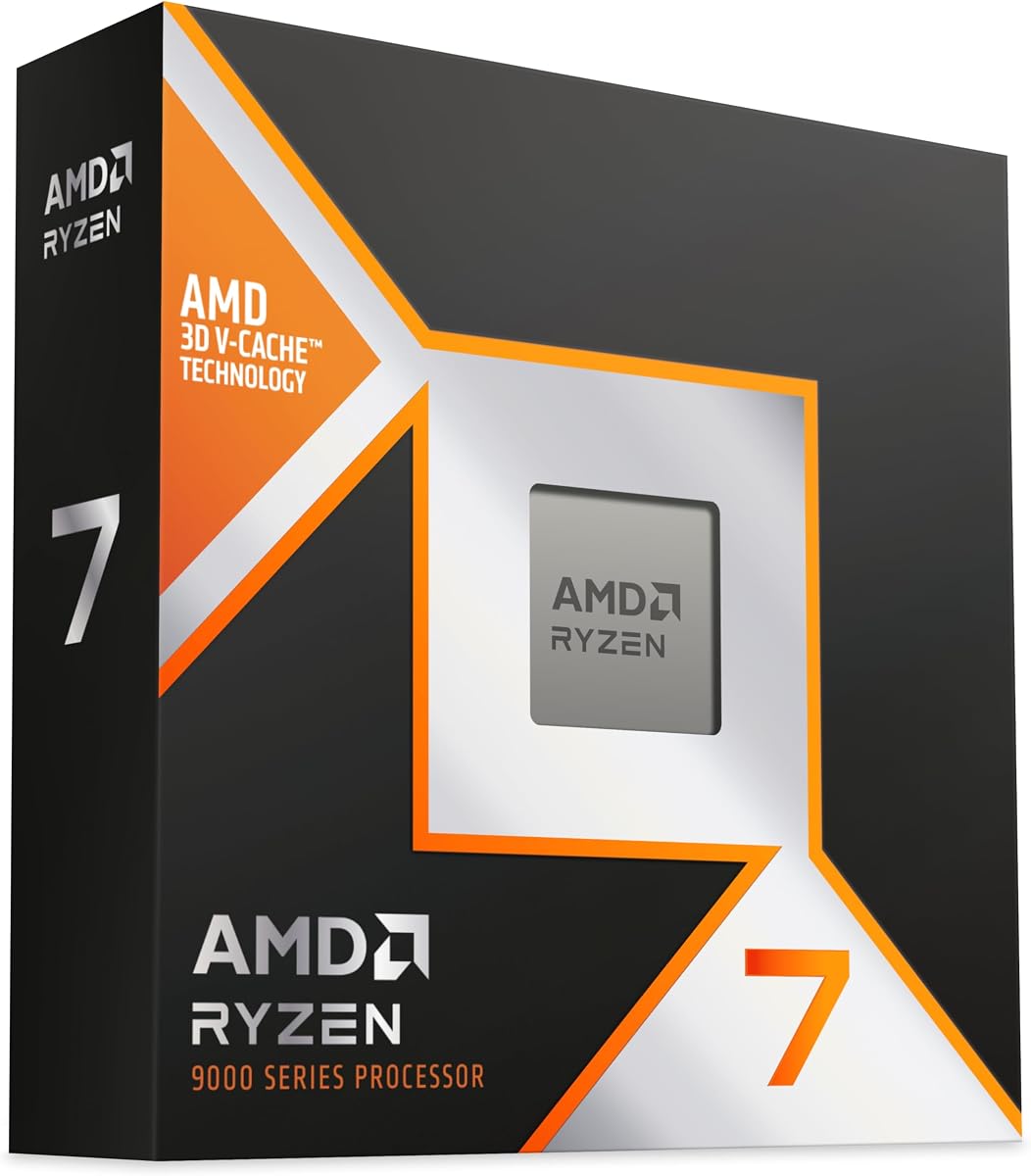
AMD RYZEN 7 9800X3D
4.8Editor score
Zen 5 technology
96MB L3 cache
Up to 5.2GHz
Discover the top Cpus for Machine Learning compared for performance, efficiency, and value to accelerate your AI workflows and training tasks today.
Choosing the right Cpus for Machine Learning is critical for developers and researchers. High core counts and memory bandwidth directly impact training speeds and model complexity.
We evaluated leading processors based on architecture, cache size, and AI-specific features. Our list balances raw power with energy efficiency for various workloads.
Each pick highlights key strengths and trade-offs for your setup. Prices fluctuate often, so check current listings before making your final purchasing decision today.
4.8Editor score

4.6Editor score

5.0Editor score
This side-by-side comparison highlights the technical specifications and capabilities of the top ten Cpus for Machine Learning available in the current market.



The NVIDIA DGX Spark 2 Pack stands as the top choice for serious AI work. It brings enterprise performance to a desktop with a 5.0 rating.
We may earn a commission when you buy through this link, at no additional cost to you.
Its Grace Blackwell architecture delivers up to 1 petaFLOP of AI performance. With 128GB unified memory per unit, it handles massive models locally.
Trade-offs include the significant cost and specialized power needs. However, the ROI from productivity gains justifies the investment for labs.
Buy this if you need reliable local inference and fine-tuning without cloud dependency. It is the definitive machine for high-end ML development.
Experience rapid testing and validation without relying on remote servers or latency issues.
Seamless integration with the full NVIDIA AI software stack accelerates deployment workflows.
We may earn a commission when you buy through this link, at no additional cost to you.
The AMD RYZEN 7 9800X3D offers incredible value for budget conscious users. It scores 4.8 due to its balanced performance and efficiency.
We may earn a commission when you buy through this link, at no additional cost to you.
Built on Zen 5 tech, it delivers 16% IPC uplift. The massive 96MB L3 cache allows high clock speeds up to 5.2GHz.
You must purchase a cooler separately which adds to the initial cost. However, thermal performance remains excellent compared to previous generations.
This processor is ideal for entry level ML and general computation. It is a smart pick for those prioritizing efficiency and speed.
Zen 5 technology ensures better performance per watt for long training sessions.
96MB L3 cache reduces latency when processing complex datasets locally.
We may earn a commission when you buy through this link, at no additional cost to you.
Intel Core Ultra 9 285K leads premium desktop options with hybrid architecture. It delivers 4.6 rating for its multi core performance and efficiency.
We may earn a commission when you buy through this link, at no additional cost to you.
The 24 cores prioritize workloads efficiently. With up to 5.7 GHz unlocked speeds, it excels at single threaded tasks too.
Compatibility with newer chipsets is a requirement for most users. Lack of thermal solution means extra budget for cooling hardware.
Ideal for users wanting high versatility and raw speed. This processor fits diverse workloads beyond just machine learning tasks.
Performance Hybrid Architecture optimizes distribution between P and E cores effectively.
PCIe 5.0 support ensures readiness for next generation accelerators and storage.
We may earn a commission when you buy through this link, at no additional cost to you.
AMD Ryzen 9 9950X3D delivers robust multi core performance with a 4.7 rating. It stands out for high frequency operation in desktops.
We may earn a commission when you buy through this link, at no additional cost to you.
Featuring Zen 5 architecture, it supports boosting up to 5.7 GHz. The 16 core count ensures smooth handling of parallel tasks.
Cost and platform requirements can be barriers for some. Yet the performance per watt remains competitive in this high end segment.
Recommended for heavy parallel processing needs. This unit is a strong contender for users prioritizing core count over budget.
Boost clock up to 5.7 GHz ensures fast execution for compute heavy tasks.
Zen 5 architecture ensures better power efficiency during sustained loads.
We may earn a commission when you buy through this link, at no additional cost to you.
AMD Ryzen 9 9900X offers balanced performance with a 4.8 rating for gamers and creators. It excels in high speed execution.
We may earn a commission when you buy through this link, at no additional cost to you.
12 cores and 24 threads provide ample parallelism. With 5.6 GHz max boost, it delivers quick task completion and high FPS.
You will need to source a separate cooler for peak performance. This adds minor steps but keeps temperatures manageable.
Great for users needing versatile power across tasks. Consider this if you want strong multi-threading without premium tier pricing.
Unlocked status allows enthusiasts to push clocks for extra performance gains.
DDR5-5600 support ensures fast data access for memory intensive workloads.
We may earn a commission when you buy through this link, at no additional cost to you.
AMD Ryzen 7 7800X3D provides dependable execution with a 4.8 rating. It is known for high cache efficiency in workloads.
We may earn a commission when you buy through this link, at no additional cost to you.
The 96MB L3 cache enables excellent hit rates for tasks. 5nm process tech ensures reliable performance with maximum productivity levels.
Max clock speed is lower than newer models. However, thermal performance remains strong and power draw is manageable for users.
Recommended for users prioritizing stability and cache. This chip remains a reliable choice for focused local ML development.
96MB L3 cache provides excellent hit rate for reduced latency.
5nm technology ensures efficient power usage for reliable daily performance.
We may earn a commission when you buy through this link, at no additional cost to you.
AMD Ryzen AI Halo is built for local AI development and inference. It scores 5.0 due to its tailored features for developers.
We may earn a commission when you buy through this link, at no additional cost to you.
Featuring 128GB unified memory, it supports 200B parameter models locally. The 50 TOPS NPU accelerates inference tasks efficiently.
Linux OS requirement limits usage for some Windows users. Connectivity is modern with Wi-Fi 7 and USB-C ports for flexibility.
Buy this if you need a standalone Linux AI environment. It offers a streamlined setup for intensive model testing workflows.
128GB LPDDR5x unified memory supports larger model data efficiently.
Purpose built Linux tools and ROCm support streamline local workflows.
We may earn a commission when you buy through this link, at no additional cost to you.
Intel Core i9-14900K offers leading clock speed with a 4.2 rating. It is designed for smooth responsiveness and high frame rates.
We may earn a commission when you buy through this link, at no additional cost to you.
With up to 6.0 GHz max speed, it delivers rapid task execution. 24 cores 32 threads support multitasking and parallel workloads.
Platform compatibility may require BIOS updates for 600 series boards. High power consumption needs adequate cooling solutions for stability.
Recommended for those needing raw speed and legacy support. This processor fits users prioritizing maximum frequency and gaming performance.
Leading max clock speed of up to 6.0 GHz for smooth play.
DDR4 and DDR5 platform support cuts load times effectively.
We may earn a commission when you buy through this link, at no additional cost to you.
AMD Ryzen 7 9850X3D is a competitive desktop option with a 4.8 rating. It leverages Zen technology for efficiency and speed.
We may earn a commission when you buy through this link, at no additional cost to you.
High performance usage ensures it can handle demanding tasks. 3D V-Cache technology improves latency and hit rates for data.
Limited specs in the listing means checking board specs is necessary. However, reputation for reliability is strong among developers.
Buy if you want Ryzen 7 power and cache benefits. This fits users needing robust compute in a standard desktop format.
3D V-Cache technology delivers high hit rates in short access times.
Ryzen 7 series line provides reliable usable and efficient performance.
We may earn a commission when you buy through this link, at no additional cost to you.
NVIDIA DGX Spark is an enterprise AI desktop supercomputer with a 4.4 rating. It brings massive compute to your desk.
We may earn a commission when you buy through this link, at no additional cost to you.
With 128GB unified memory, it accelerates time to solution. The Grace Blackwell chip handles local fine-tuning and analytics well.
High cost and environment requirements limit accessibility. However, the ROI from increased productivity and innovation justifies it.
Recommended for teams needing secure local high-performance computing. This unit is perfect for prototyping and validating AI ideas.
Up to 1 petaFLOP of AI performance accelerates time to solution.
Develop locally and deploy anywhere with seamless AI stack integration.
We may earn a commission when you buy through this link, at no additional cost to you.
Selecting the right CPU requires balancing core counts, cache, and architecture to meet your specific model training needs.
Higher core counts allow parallel processing of tasks which speeds up training loops. Look for at least 8 cores for basic needs.
Prioritize high thread counts to maximize efficiency when running multiple experiments simultaneously.
L3 cache is vital for ML workloads because it stores frequently accessed model weights locally. Larger caches reduce memory latency.
Choose processors with significant L3 cache like 96MB or more for complex model handling.
Modern architectures like Zen 5 or Intel Ultra optimize instructions per clock. This means better performance per watt and heat management.
Ensure the CPU architecture supports the latest instruction sets for AI math operations.
Fast memory access is critical for feeding data to cores without bottlenecks. Unified memory pools can significantly boost model size capacity.
Look for DDR5 support or unified memory options to maximize data throughput.
Check motherboard socket compatibility and chipset support before buying. Newer AM5 or 800 series boards offer better long term support.
Verify PCIe 5.0 support to future proof your setup for upcoming accelerators.
High performance chips generate heat during sustained loads. Ensure you have adequate thermal solutions to maintain clock speeds.
Invest in quality cooling to prevent throttling during long training runs.
Some platforms support specific software libraries like ROCm or AI stacks natively. This simplifies installation and configuration.
Pick a platform that aligns with your existing framework ecosystem to save time.
Determine your budget range and prioritize core specs accordingly. Often mid range chips offer better value for entry level tasks.
Balance initial cost with potential performance gains to find your ideal setup.
Install the CPU carefully on the motherboard following safety guidelines for static. Ensure the cooler is mounted properly for heat transfer.
Configure BIOS settings for performance modes if you want maximum frequency. Keep firmware updated to maintain stability and security.
Monitor temperatures regularly using software tools to ensure health. Clean dust filters periodically to maintain efficient cooling airflow.
While a CPU can run basic inference and training, a GPU accelerates these tasks significantly due to parallel architecture. Cpus handle data loading and orchestration efficiently.
At least 12 cores are recommended to handle parallel data processing and model loading. Higher counts reduce iteration time for complex workflows.
Yes, high memory bandwidth ensures data moves quickly to cores preventing bottlenecks. DDR5 or unified memory options provide better throughput for datasets.
Cache stores frequently accessed model weights locally reducing latency. More L3 cache improves hit rates leading to faster processing times.
Both offer strong options but AMD Zen 5 excels in efficiency while Intel Ultra optimizes hybrid architecture. Choose based on your software ecosystem needs.
Yes, especially models with high memory capacity like the DGX Spark options. Standard CPUs handle smaller models or distillation tasks effectively.
High end air coolers or 240mm+ AIO liquid coolers are recommended. They maintain clock speeds during long training sessions effectively.
Yes, most ML frameworks are optimized for Linux environments. Choosing a platform with good Linux support simplifies software integration and deployment.
We reviewed ten top options ranging from powerful desktop processors to dedicated AI supercomputers for local work. Each offers distinct strengths depending on scale.
Prioritize memory capacity and core count for efficient workflows. Balance your budget with specific needs for inference versus full training.
Always check current listings and availability before purchasing. Prices and deals change frequently so verify the latest data today.